POST & BEAM BEAUTY FOR SALE BY DESIGN/BUILDERS OF THE HOBBIT HOUSE

A Barn was Saved - A Dream was Built

Higher Ground, Middletown Springs, Vermont

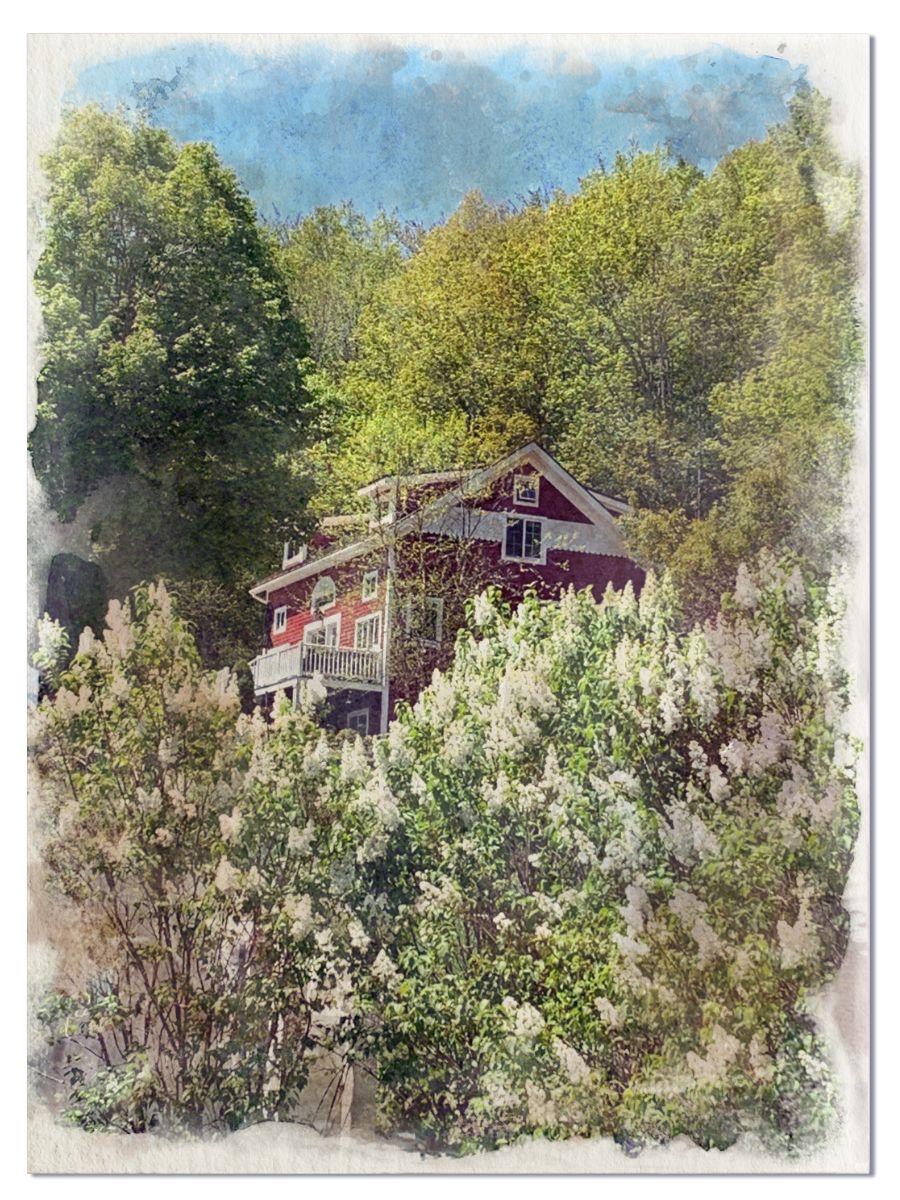
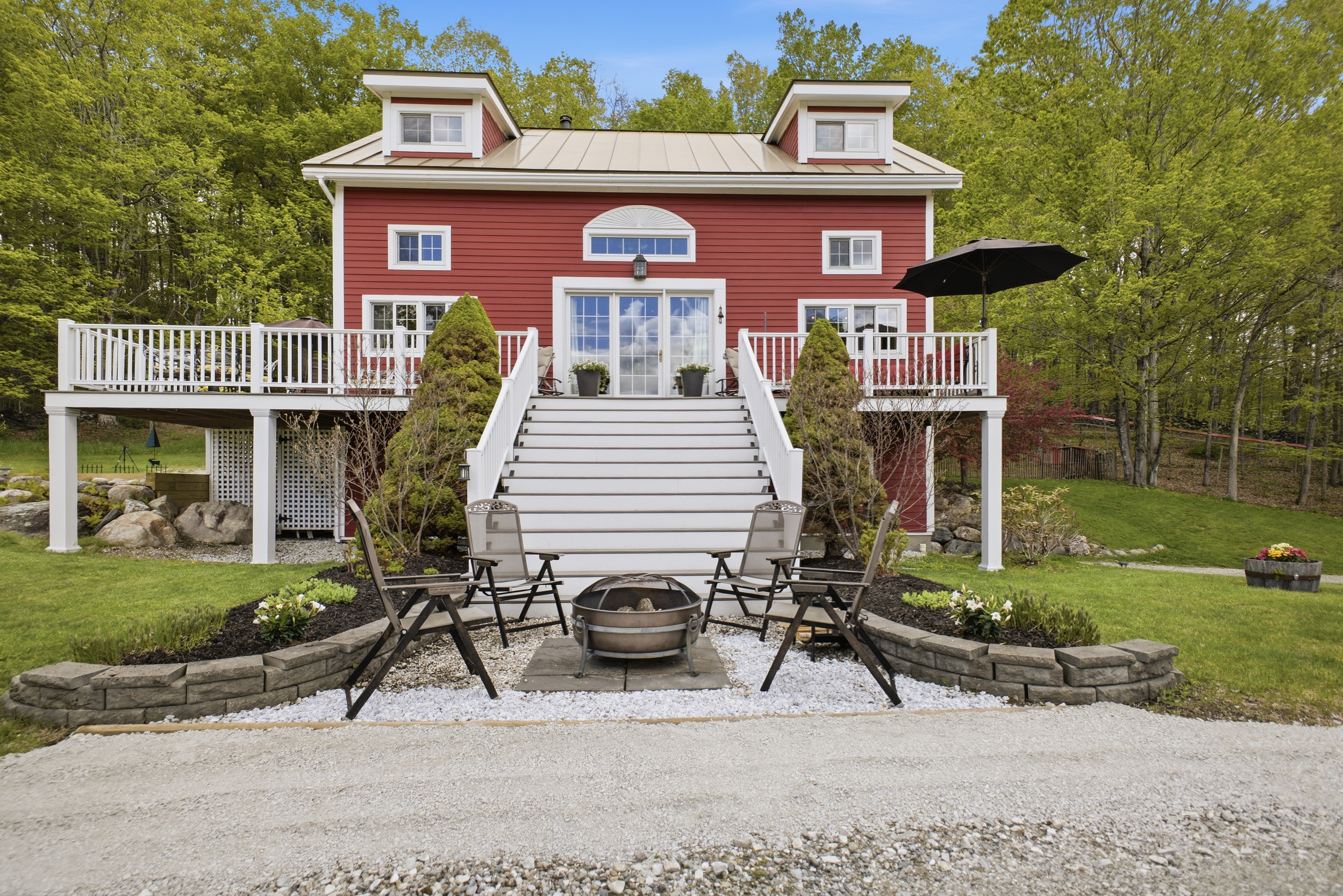
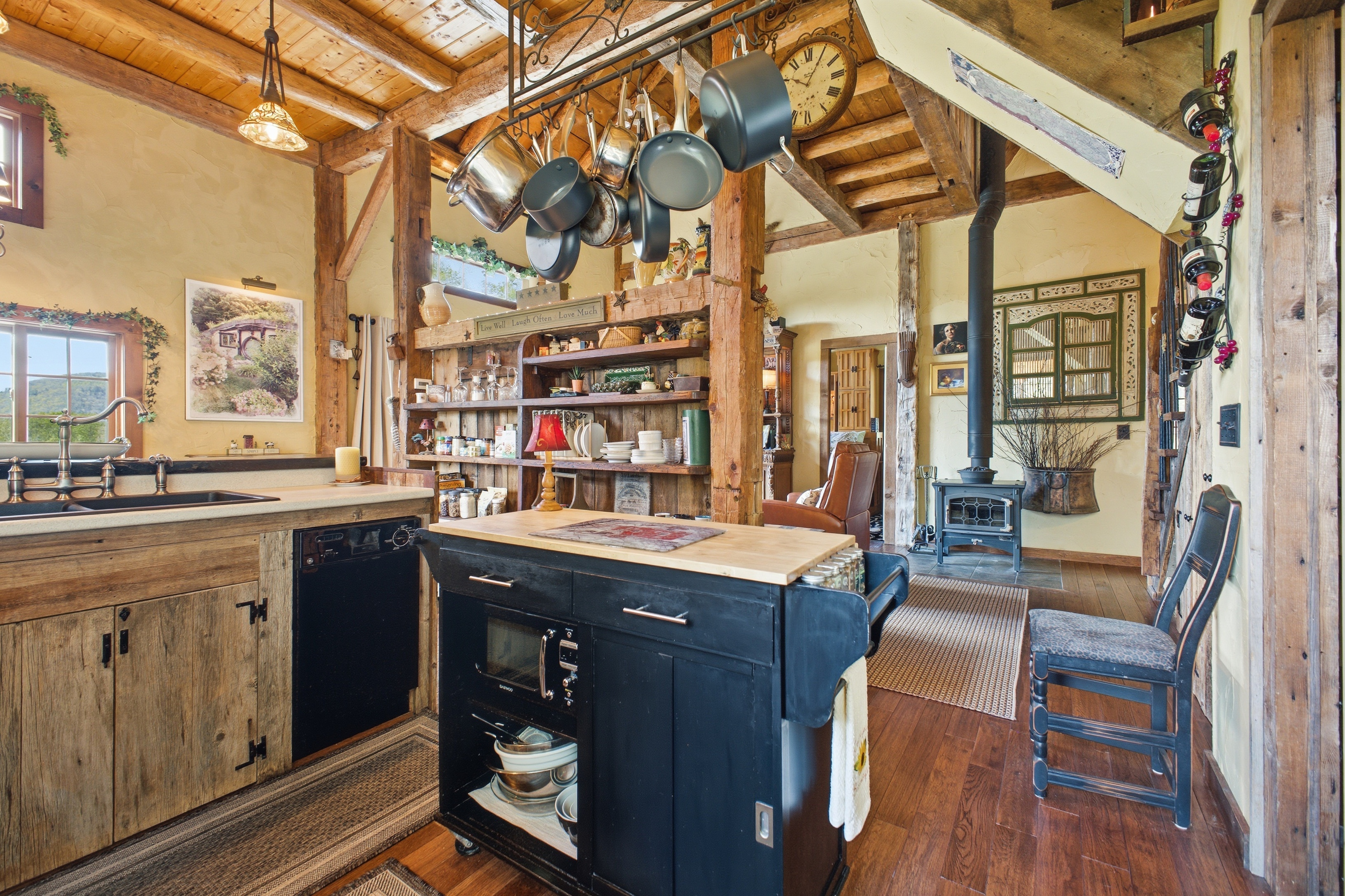
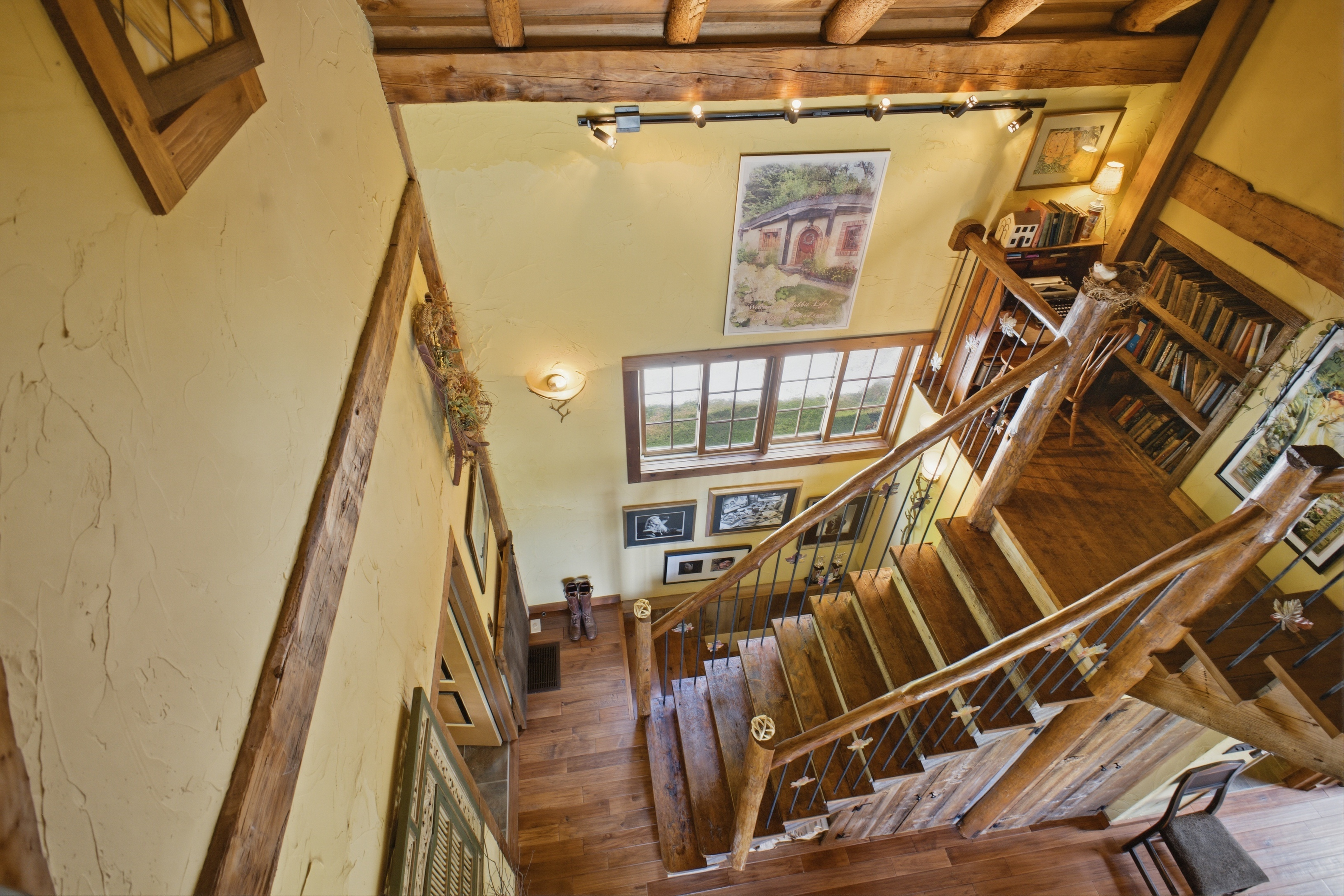
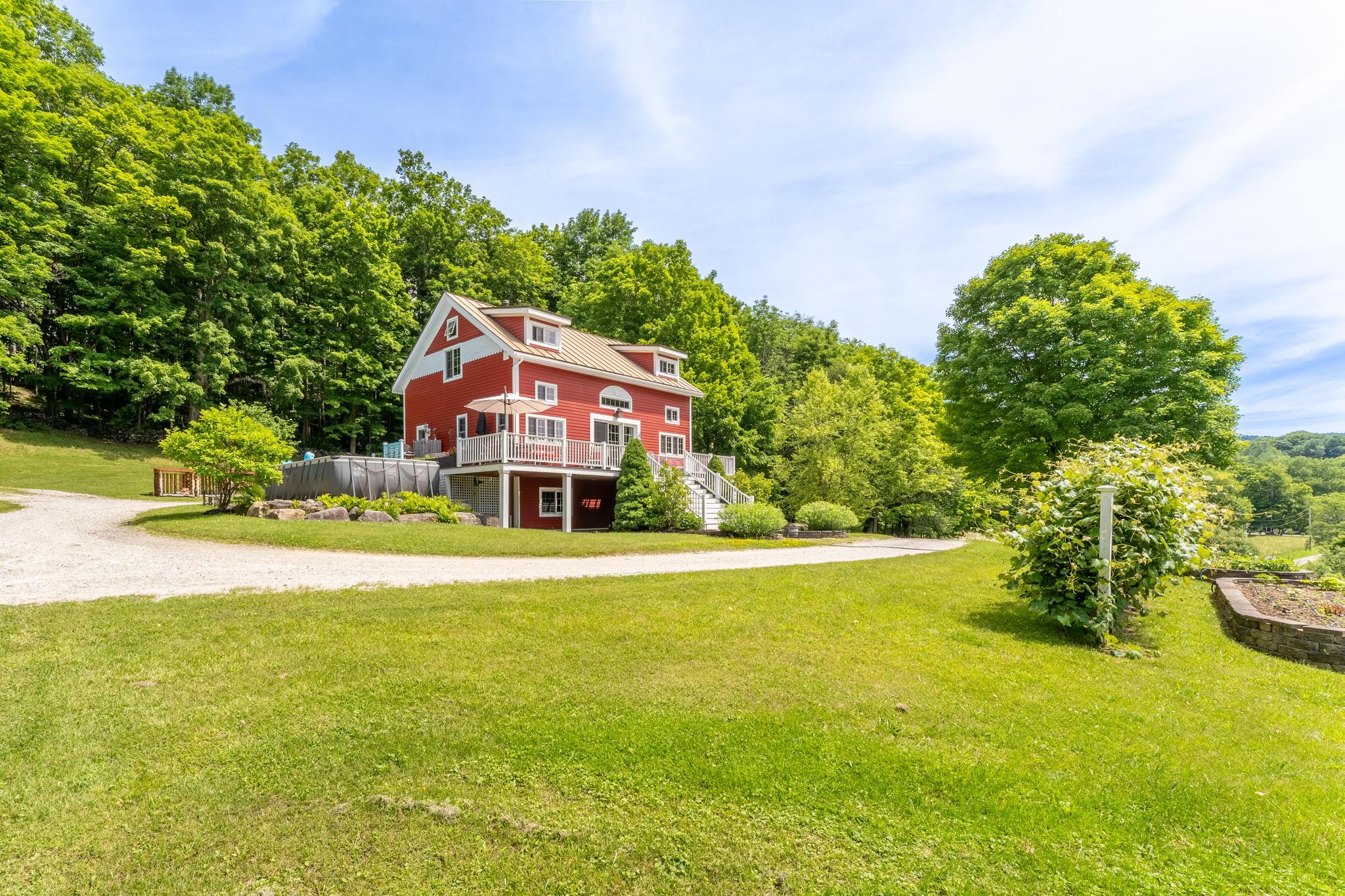
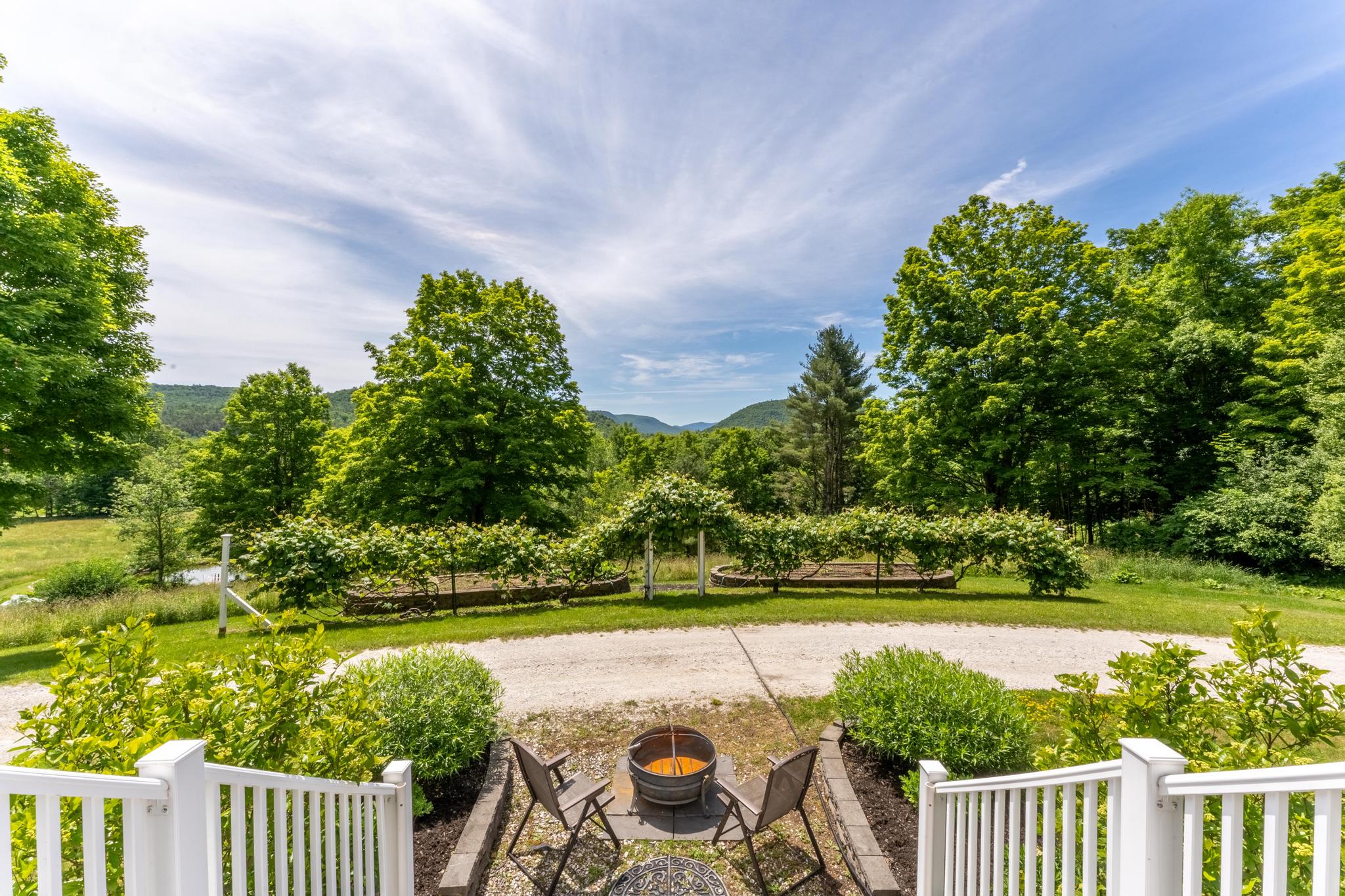
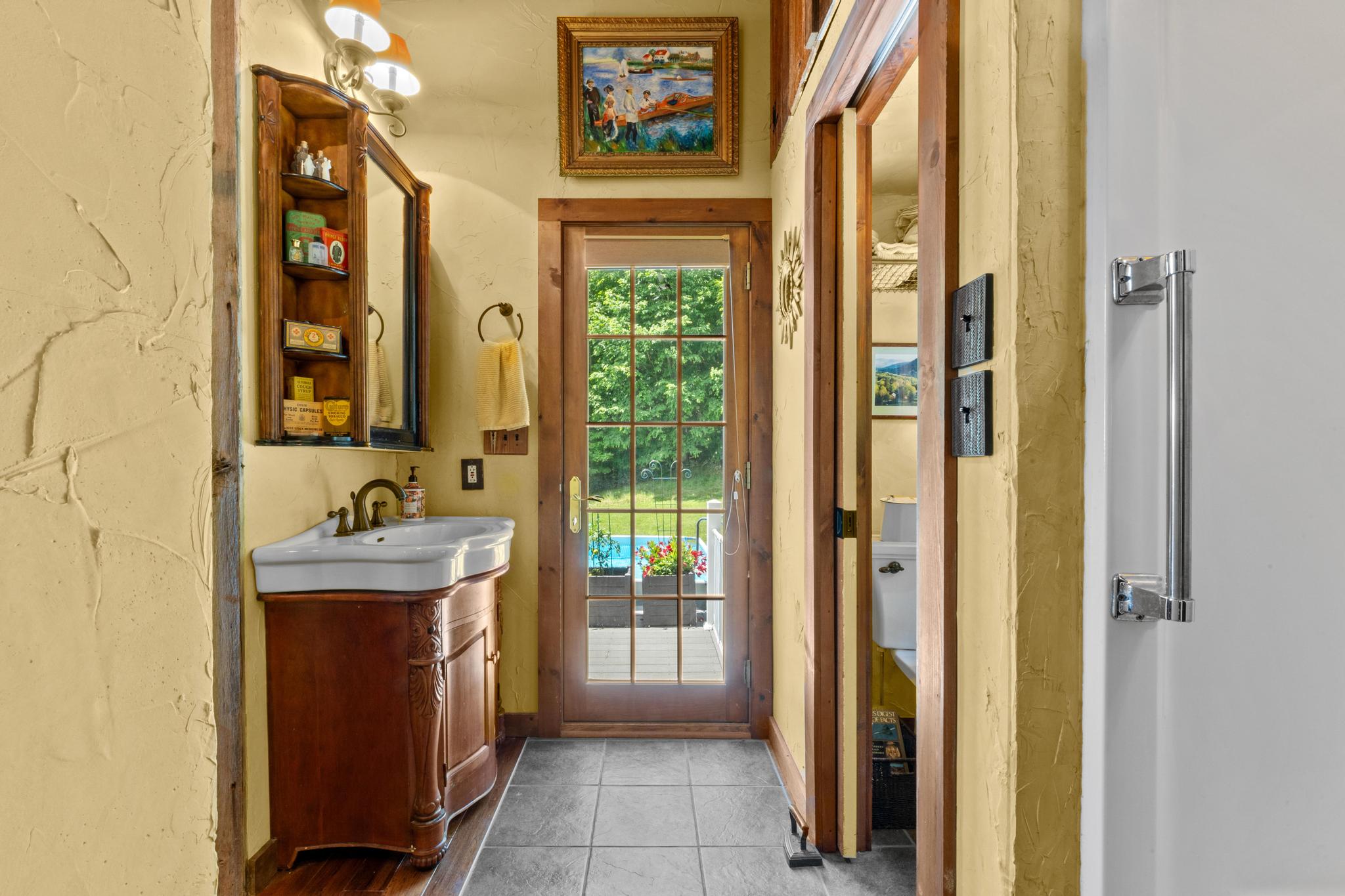
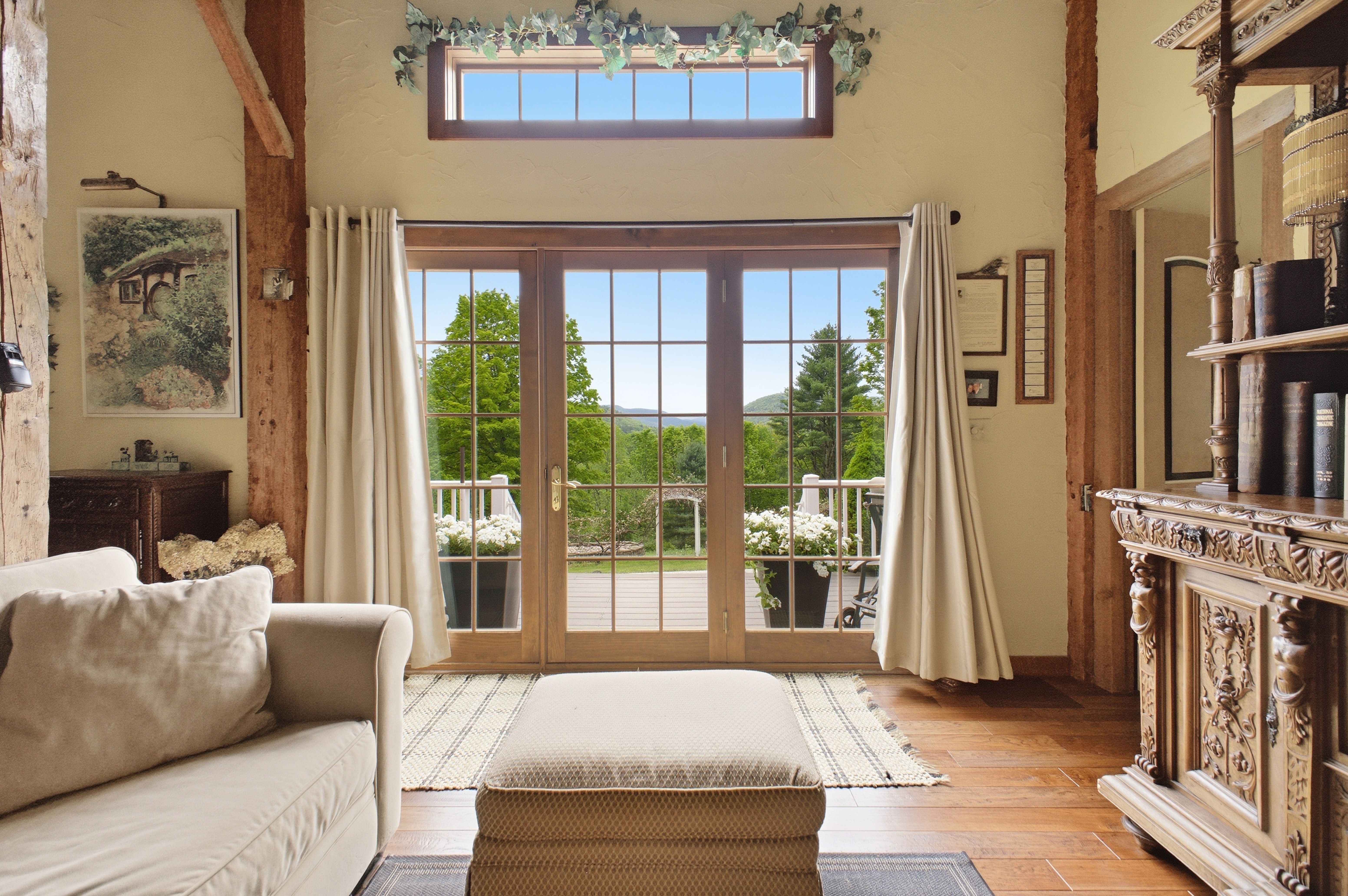
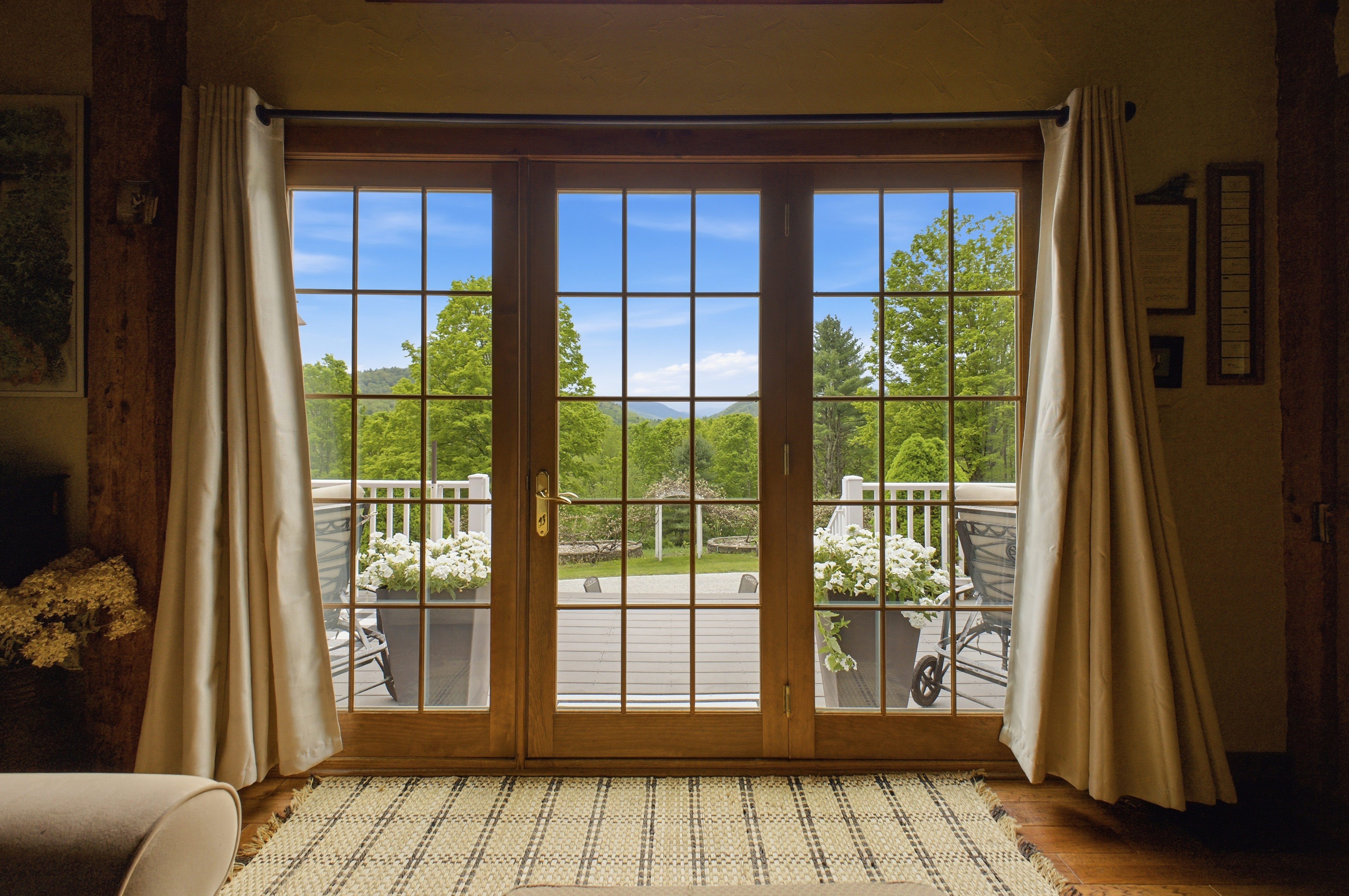
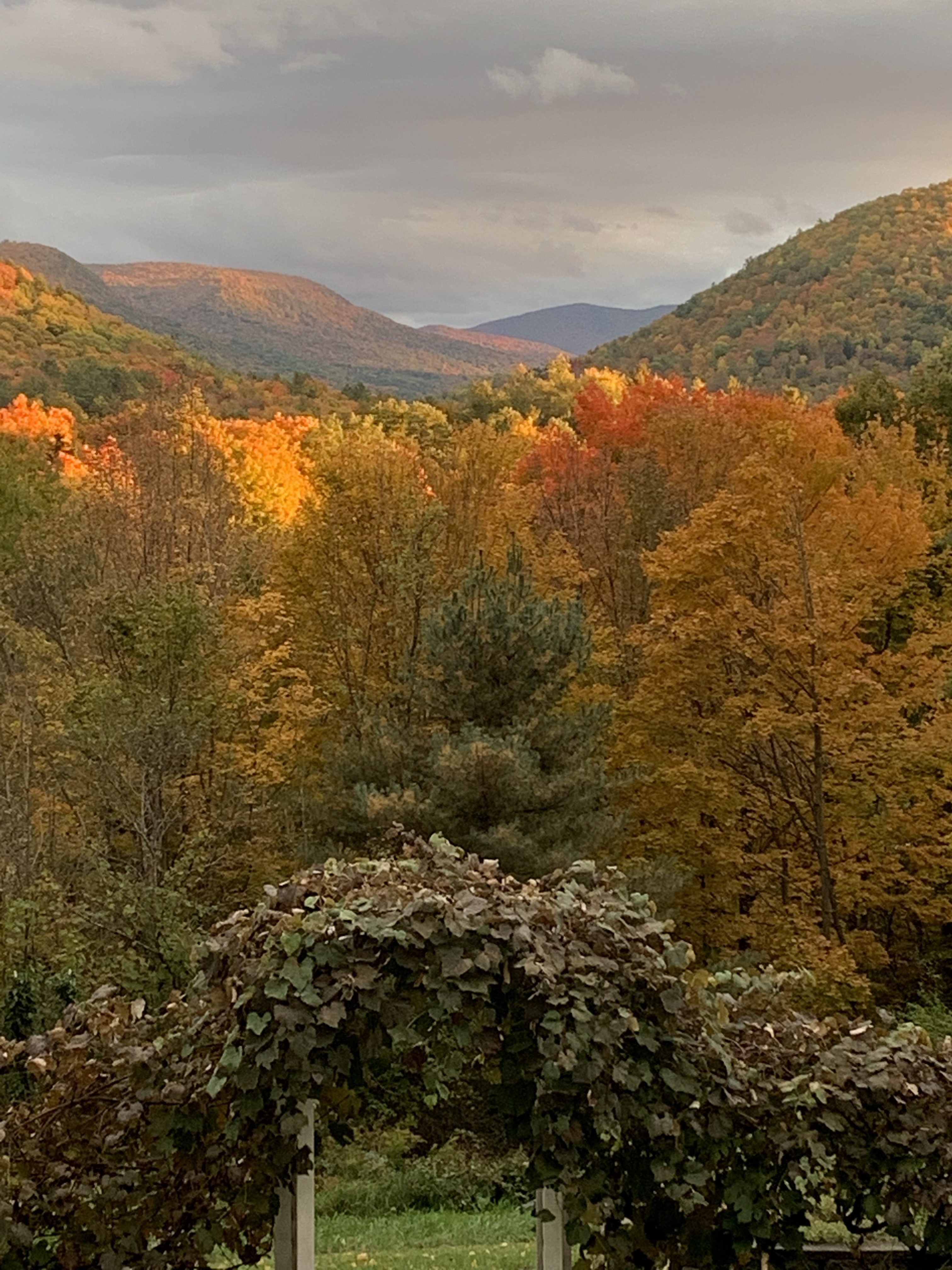
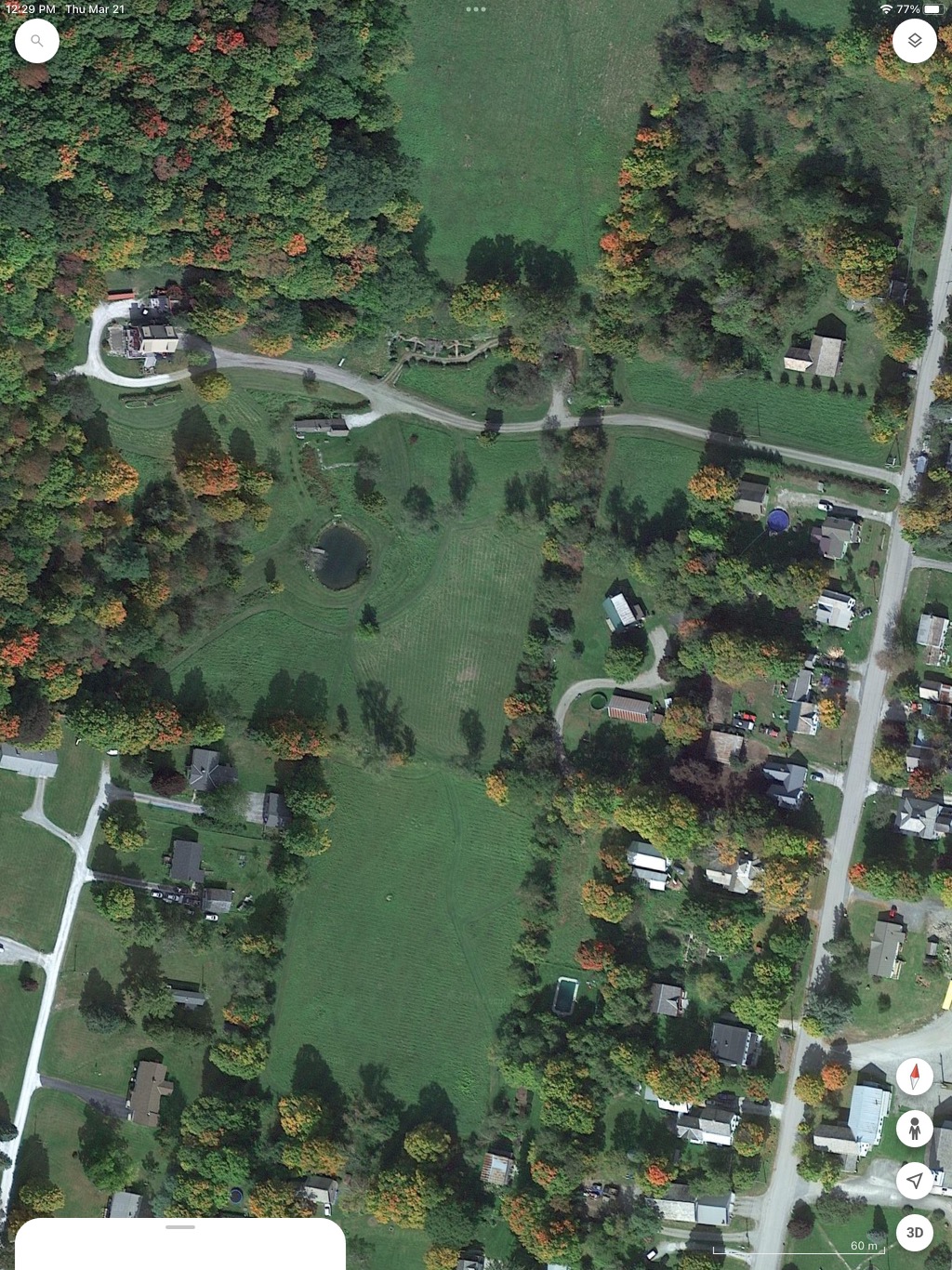
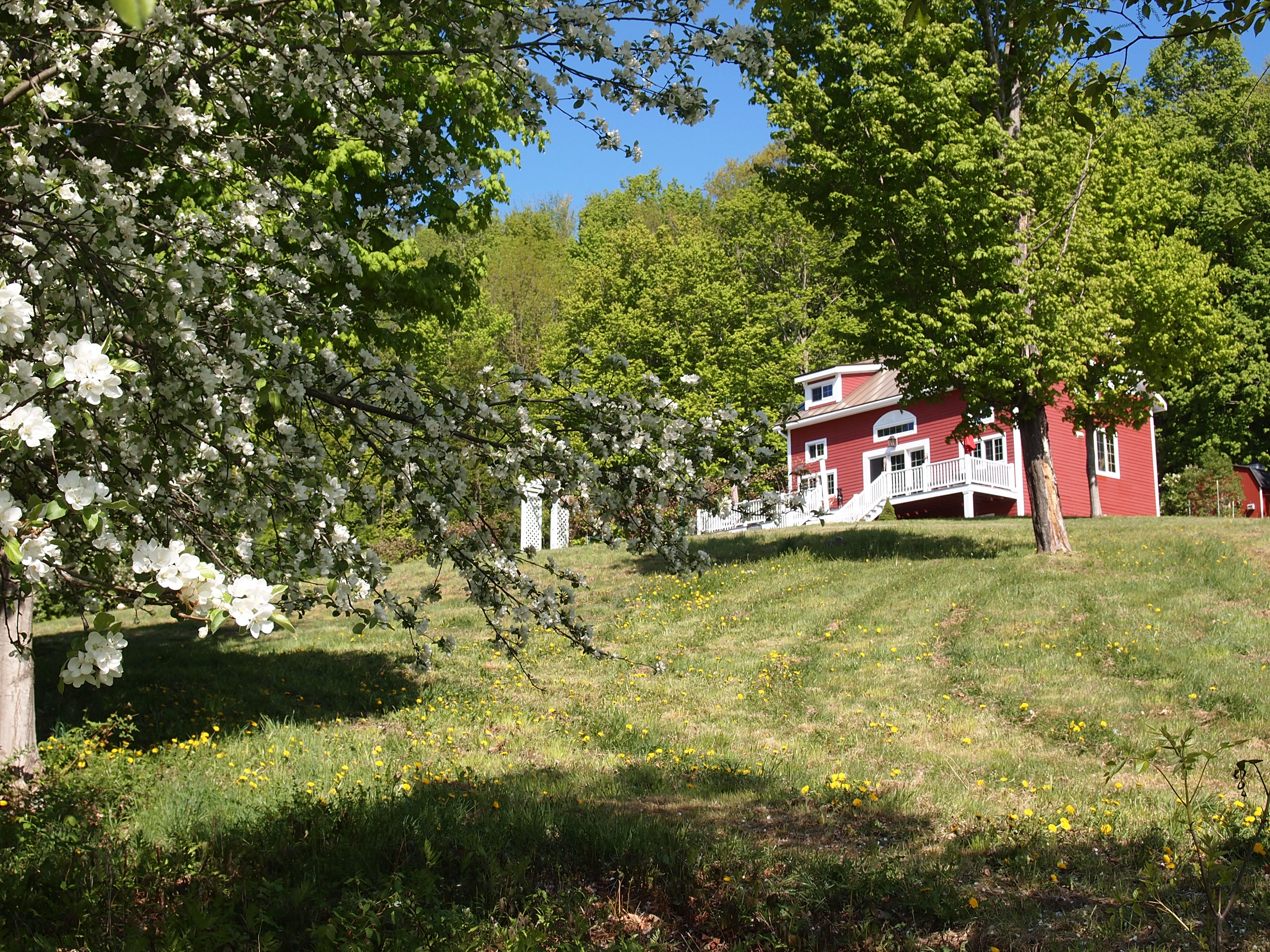
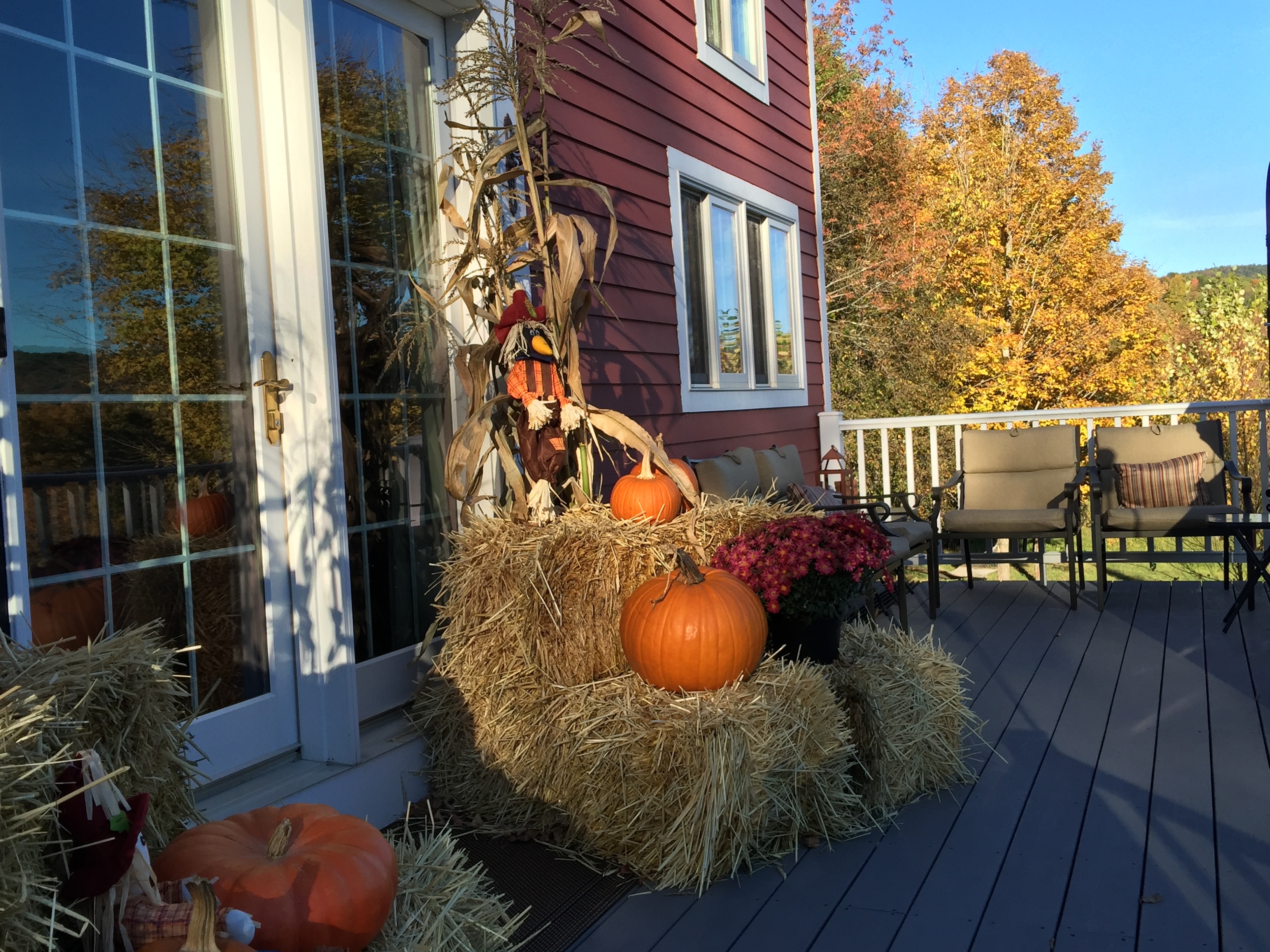
Our Design/Build (2005), 160-year-old post & beam barn, was rescued and reimagined into a uniquely crafted 2,100 sq. ft. farmhouse on 4 private organic acres. South-facing. Both near & far valley views. Stone walls. Old maples. Open meadow. Wood lot. Spring water access. Three+ bedrooms, three full baths, one half bath. People’s impressions of this little red house on the hill? “Wow, pictures do not do it justice! So much character in this home.” Turn key package available.

The ‘amenity adjacent’, on 8 adjoining acres is our Design/Build (2018) Hobbit House. VisitHigherGround.com to link to Airbnb and get a sense of the beauty of Higher Ground from over 150 reviews. An amazing ‘staycation’ for you, family or friends, this property has been featured nationally and internationally and out of the 8.1 million homes on Airbnb, you will note it has been awarded the distinction of being in the top 5%. 

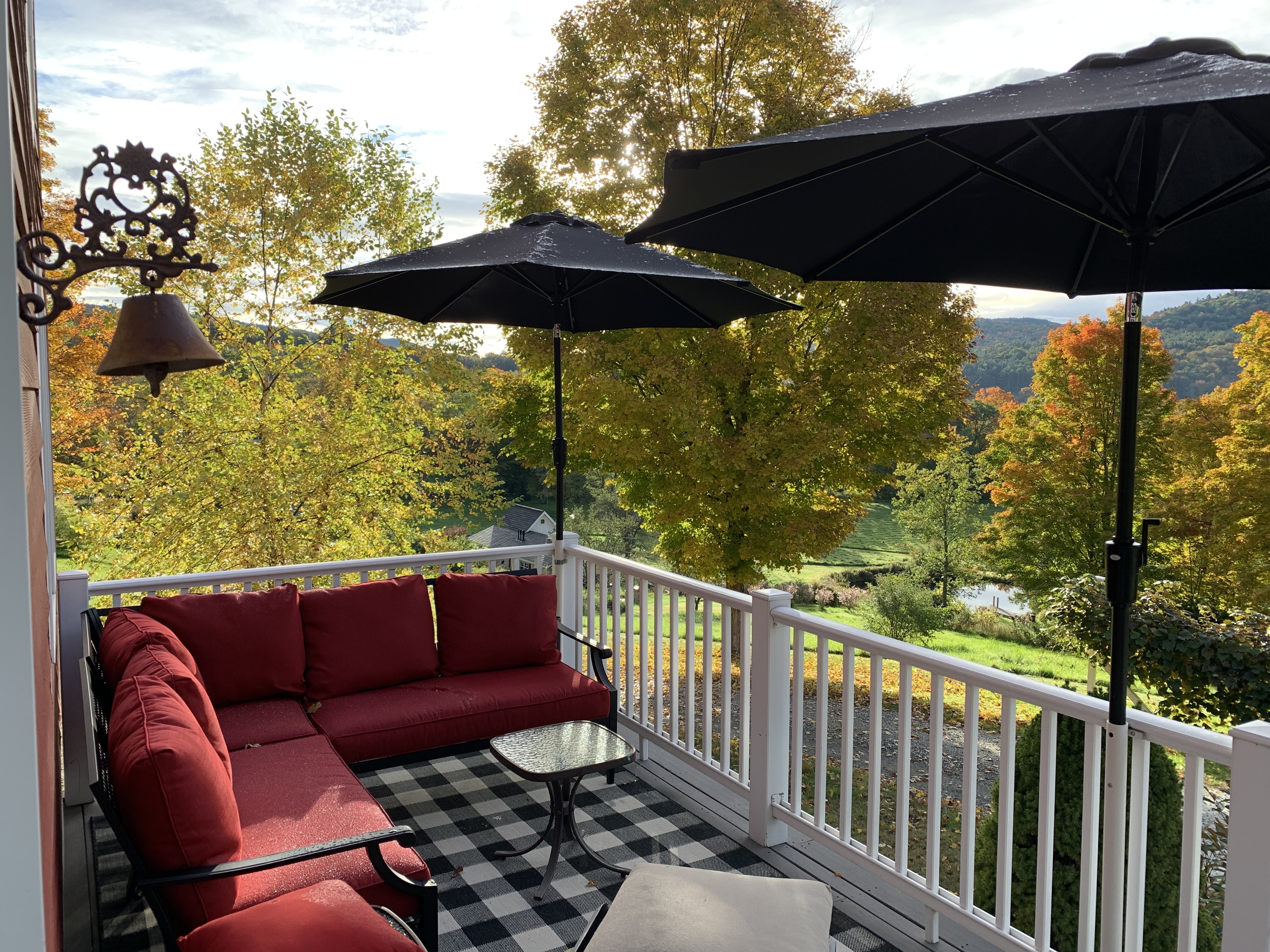
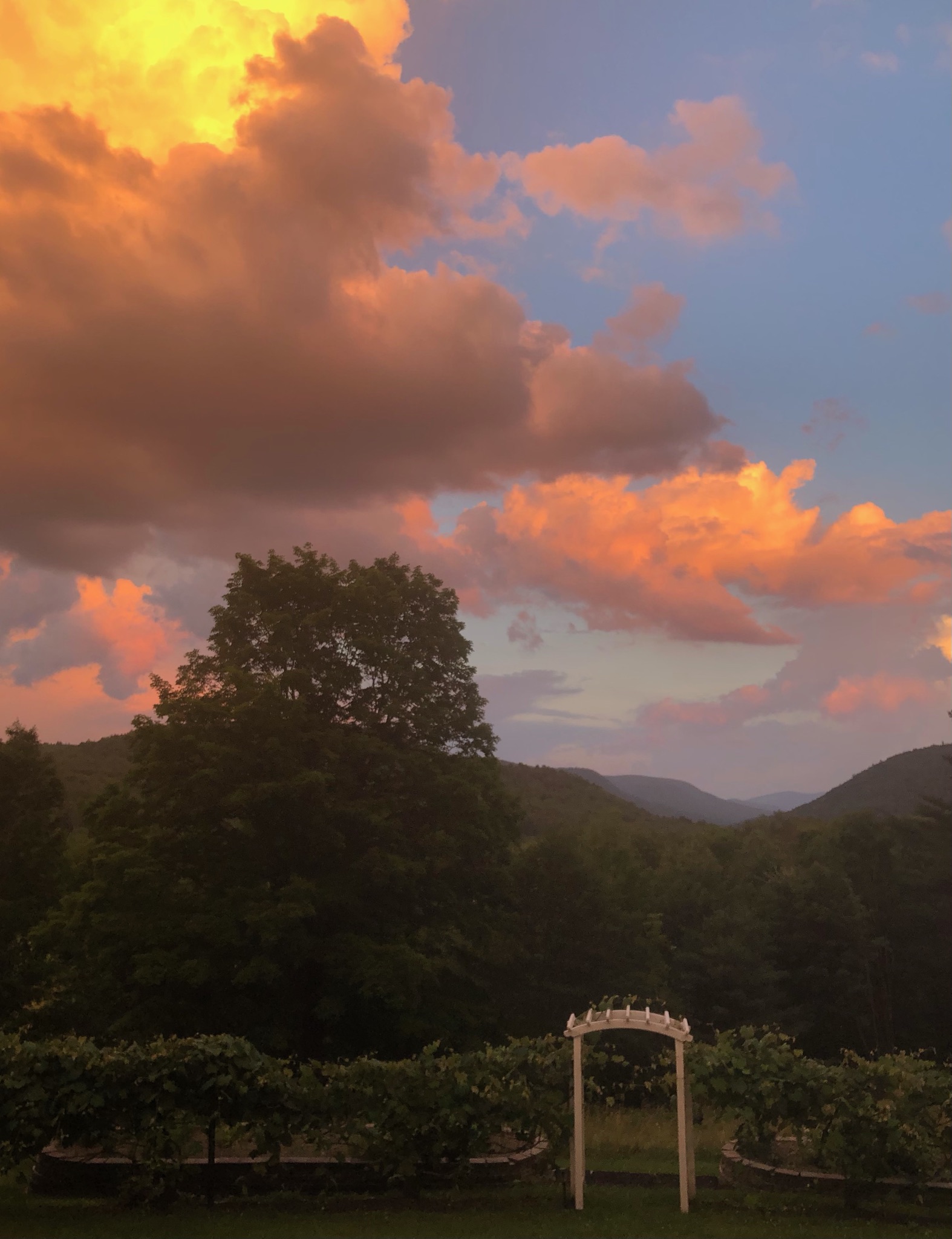
Four hours by train from NYC into Rutland. Short flight from Boston. Leave a beater car at the station, grab groceries, and 25 minutes later you're standing on a wrap-around deck watching the sunset on the lush, green rolling hills of Vermont.

The Origin Story

In 2004, my soon-to-be husband had an idea: save his 160-year-old post & beam barn and move it 1,100 feet up to the sweet spot it now occupies. Eighteen months later, we had a home and something rarer than that, a new home that captures the spirit of old-world charm.

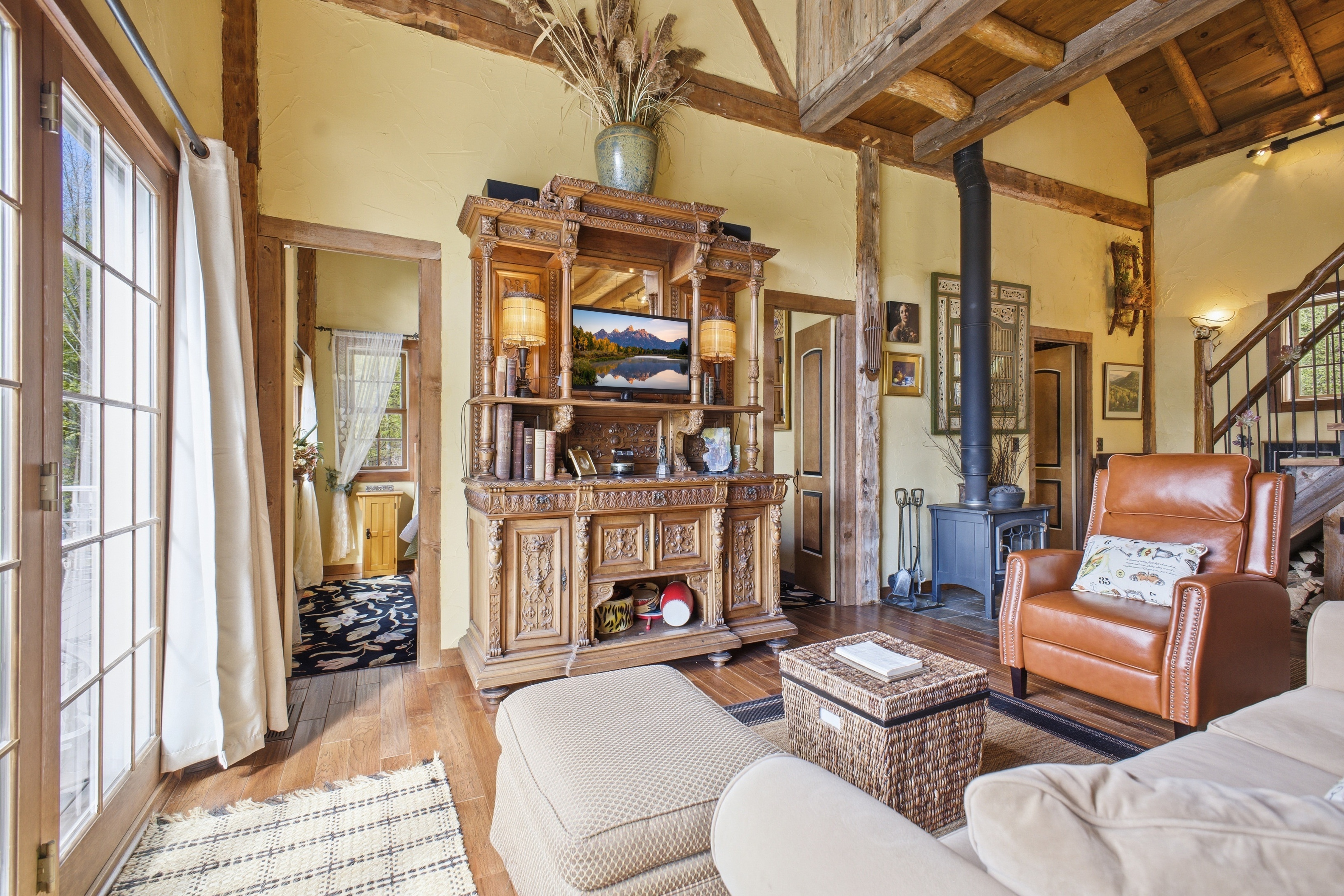
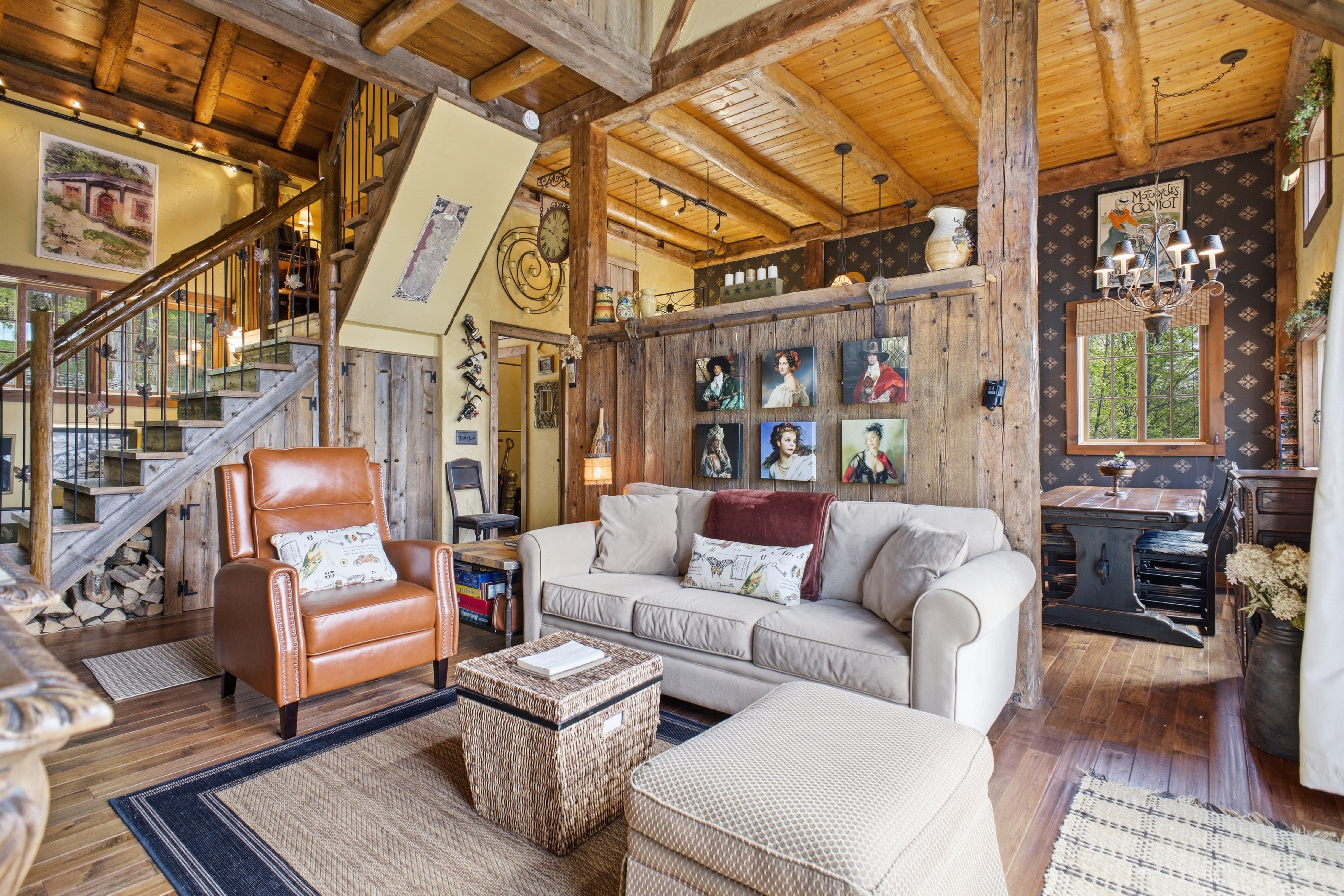
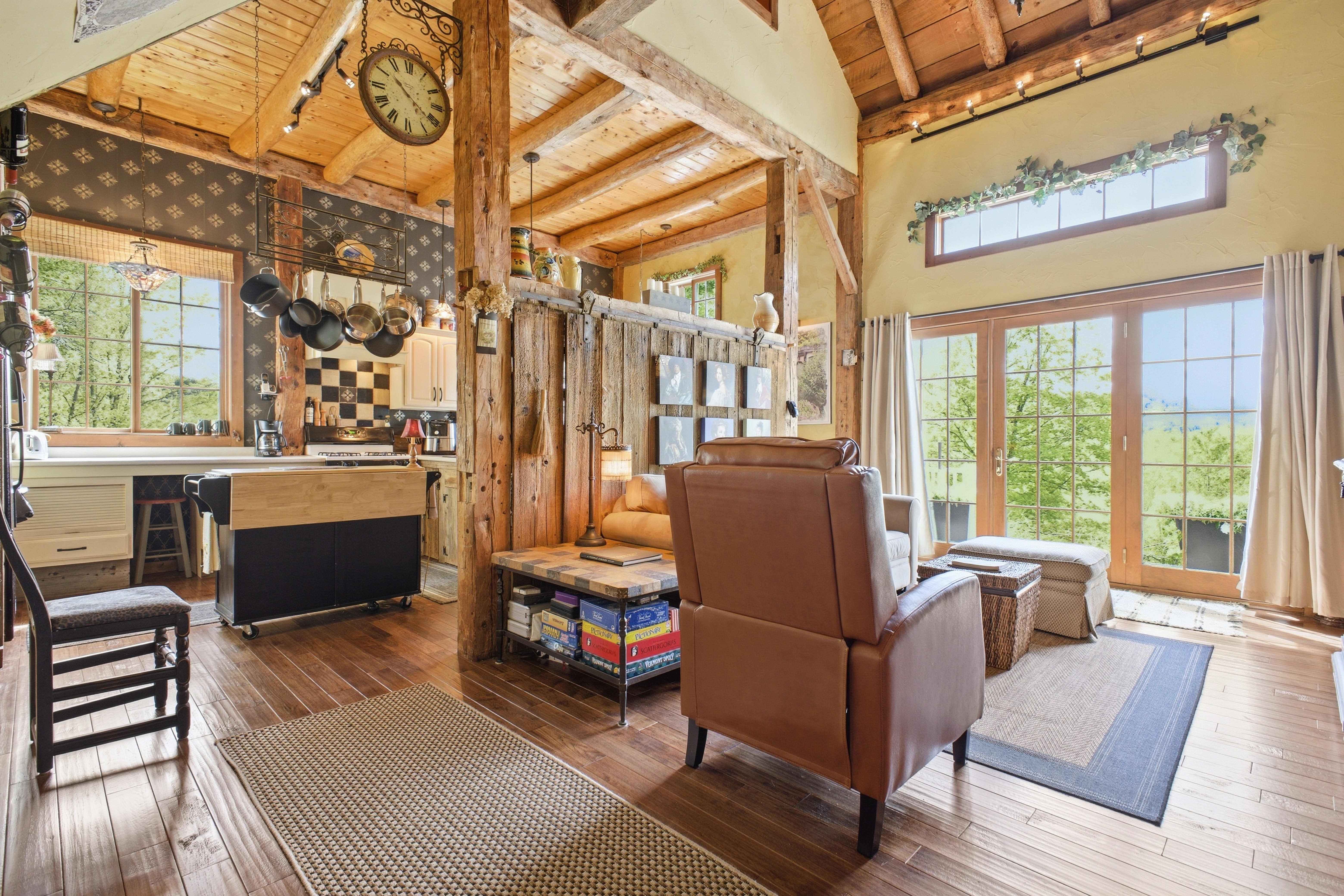
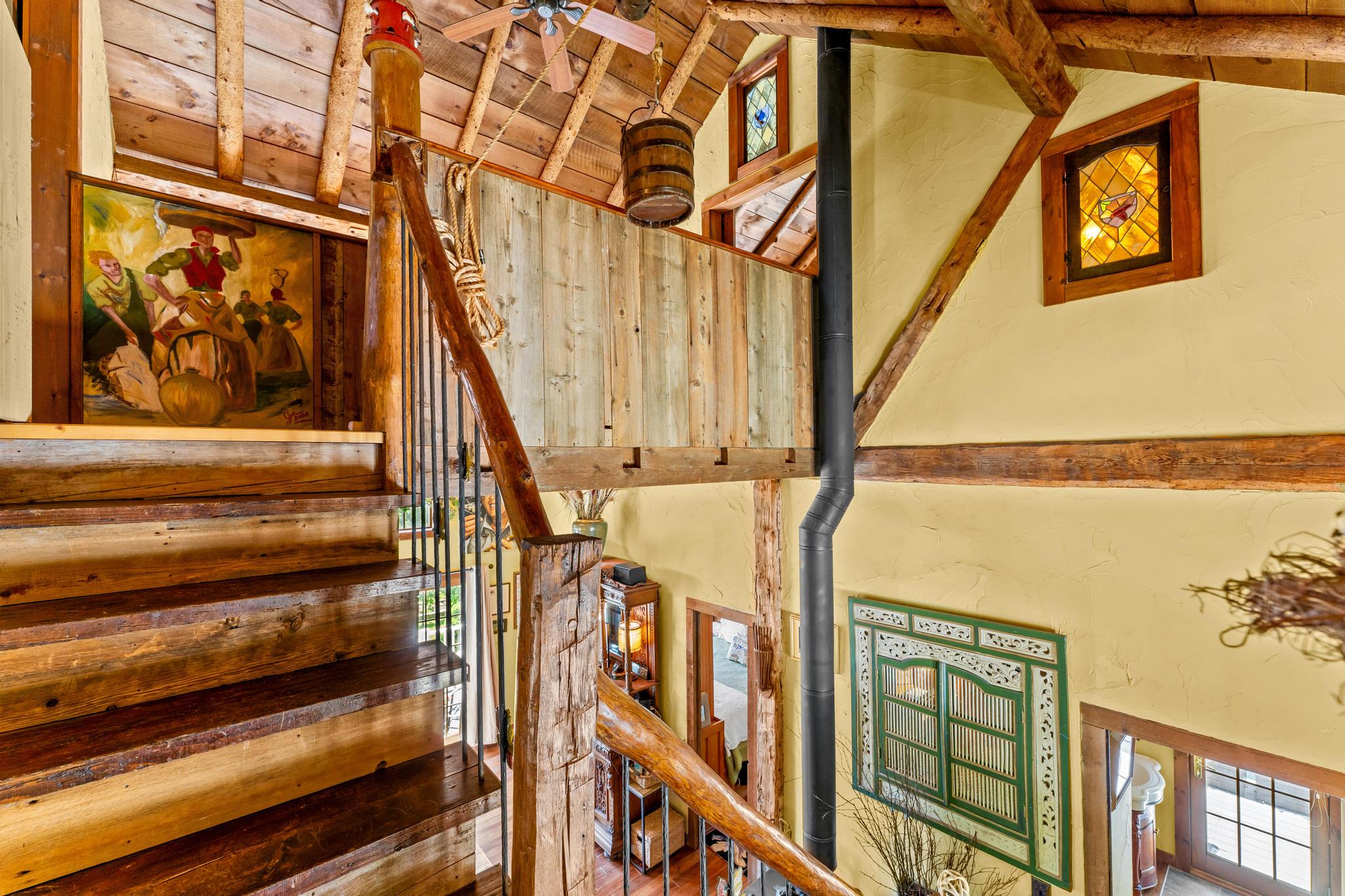
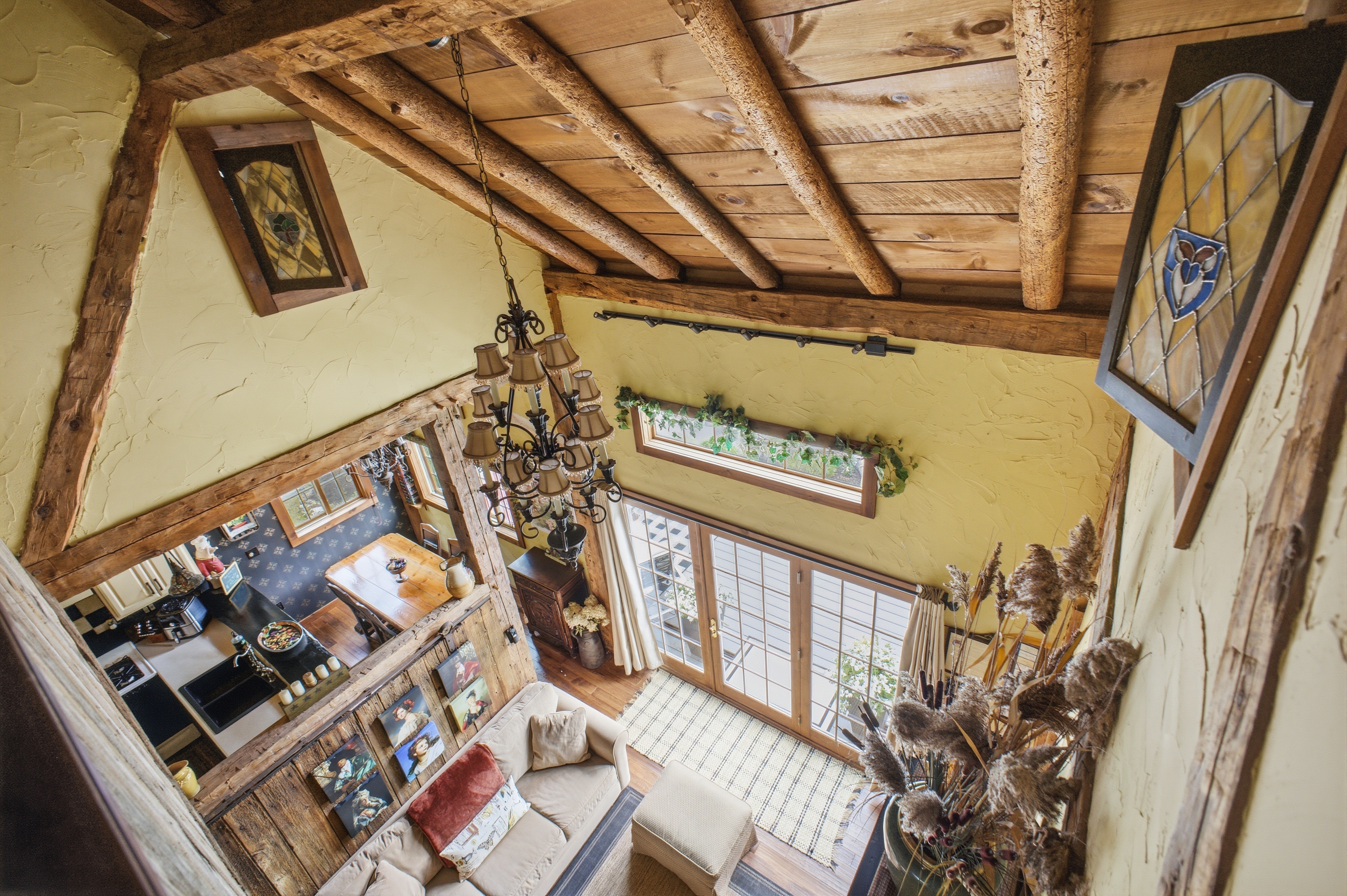
We reclaimed every outside barn board and barn door, working them into a design that, with stucco walls and timber framing, created the classic look and feel. The posts & beams didn't become a backdrop, they are the beautiful bones.

The Home Itself

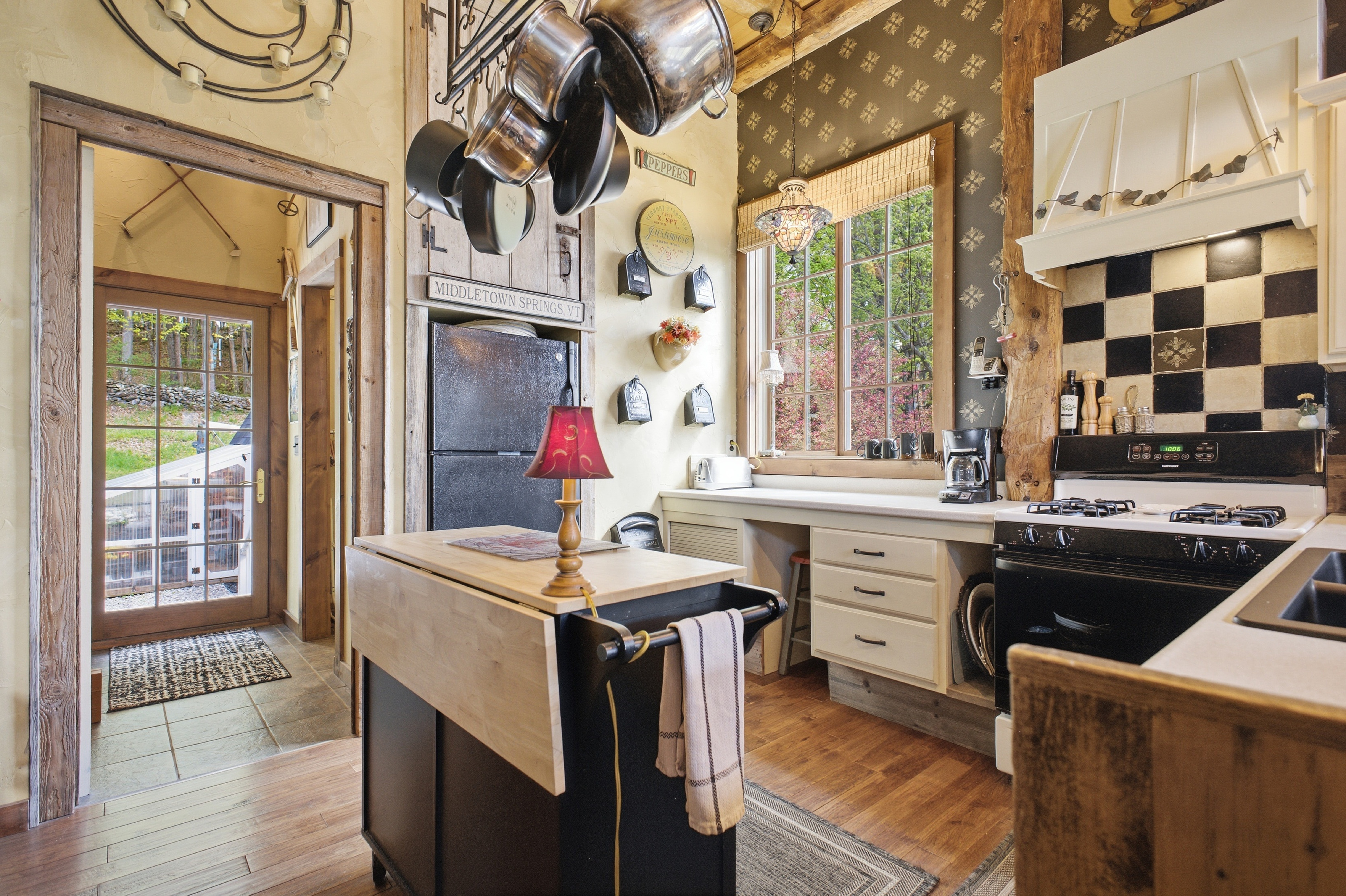
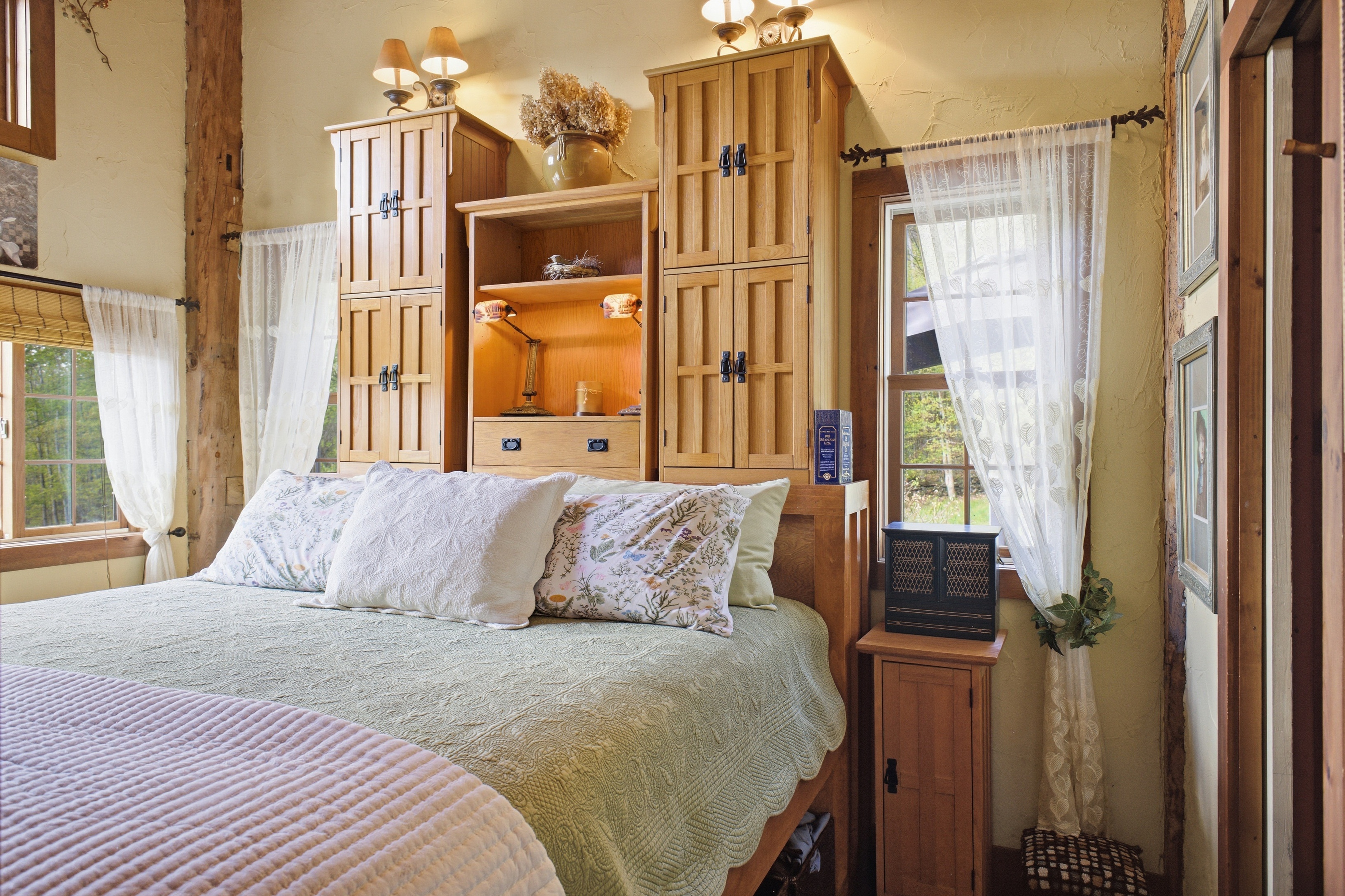
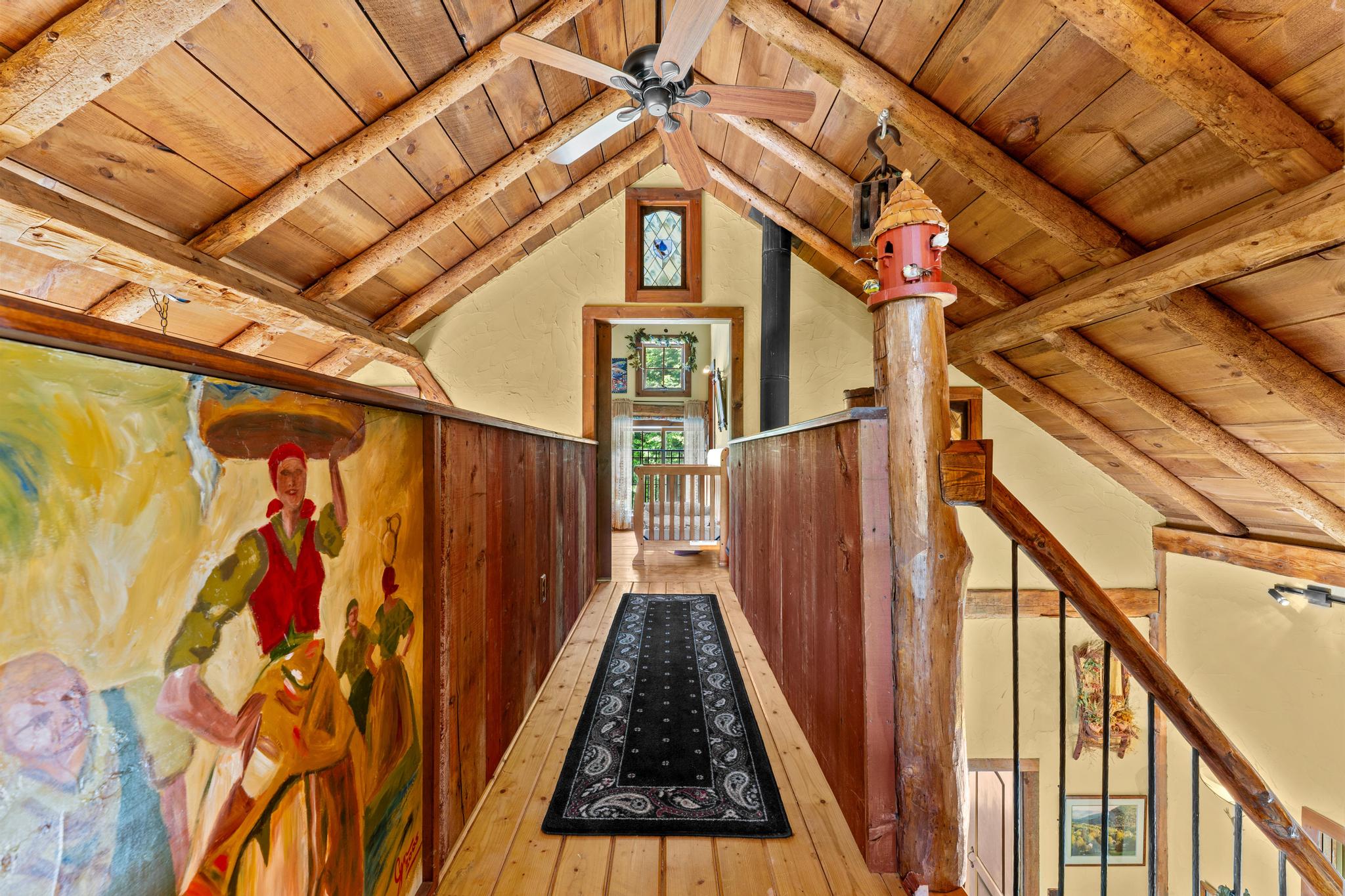
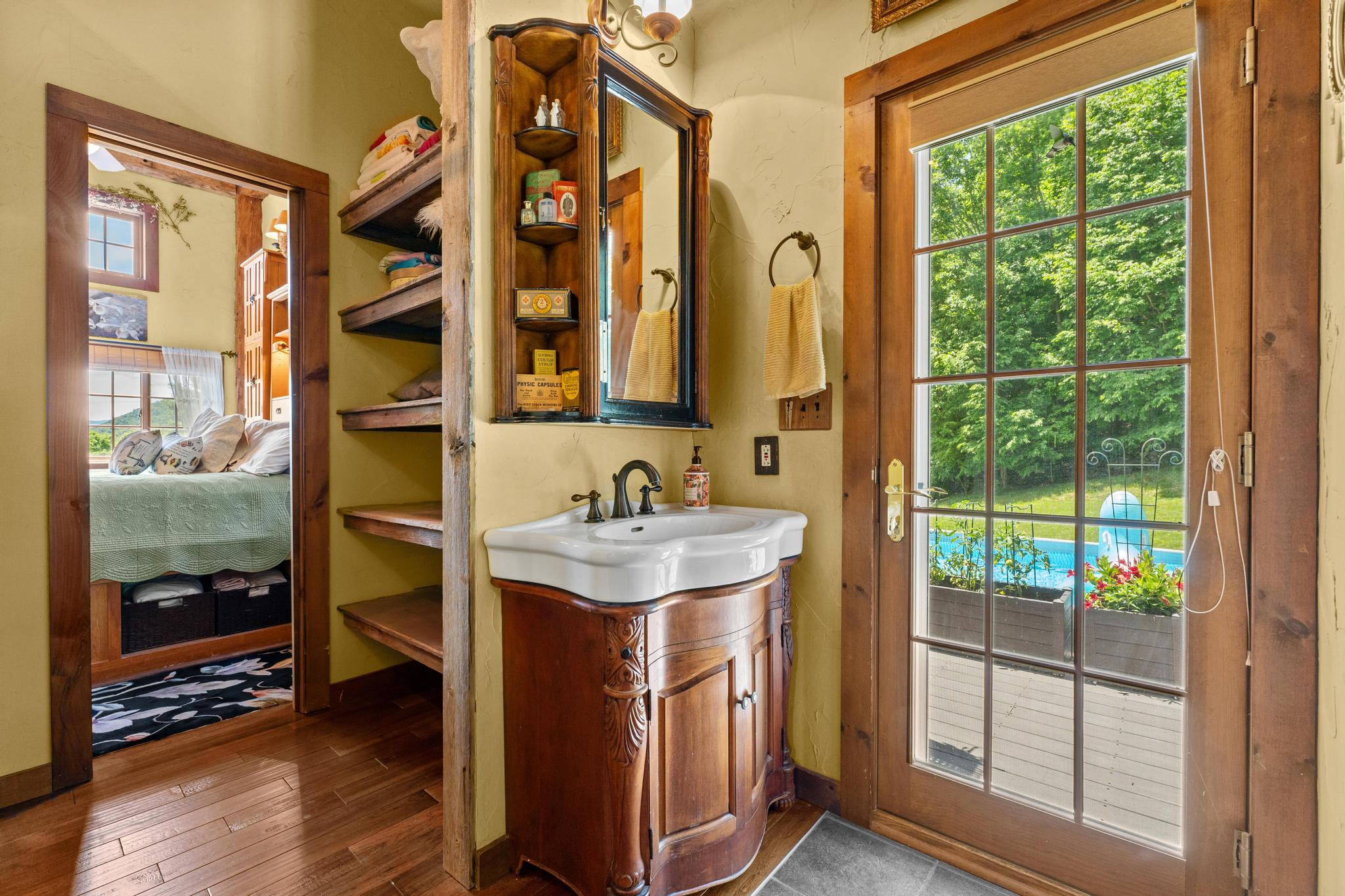
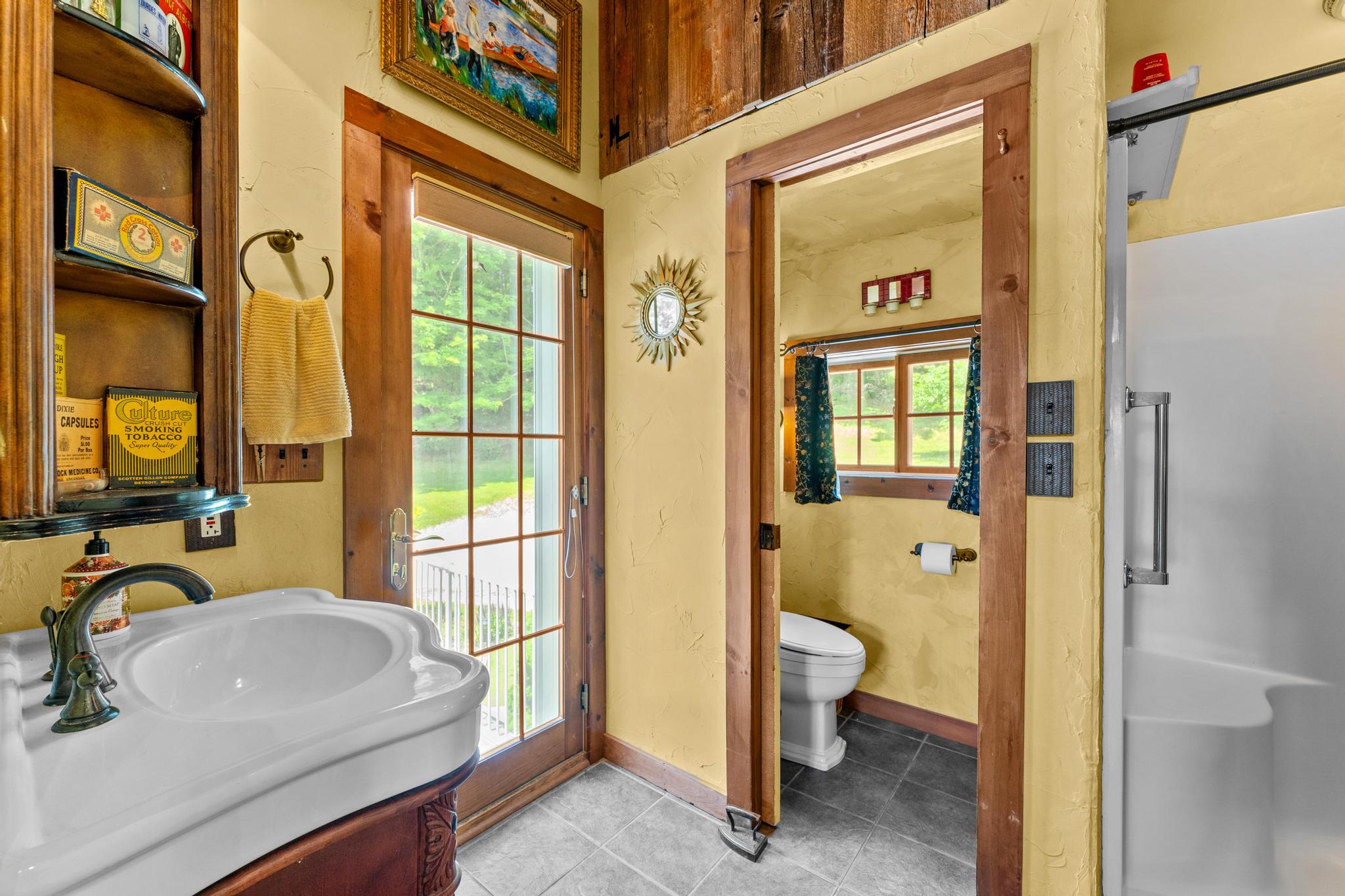
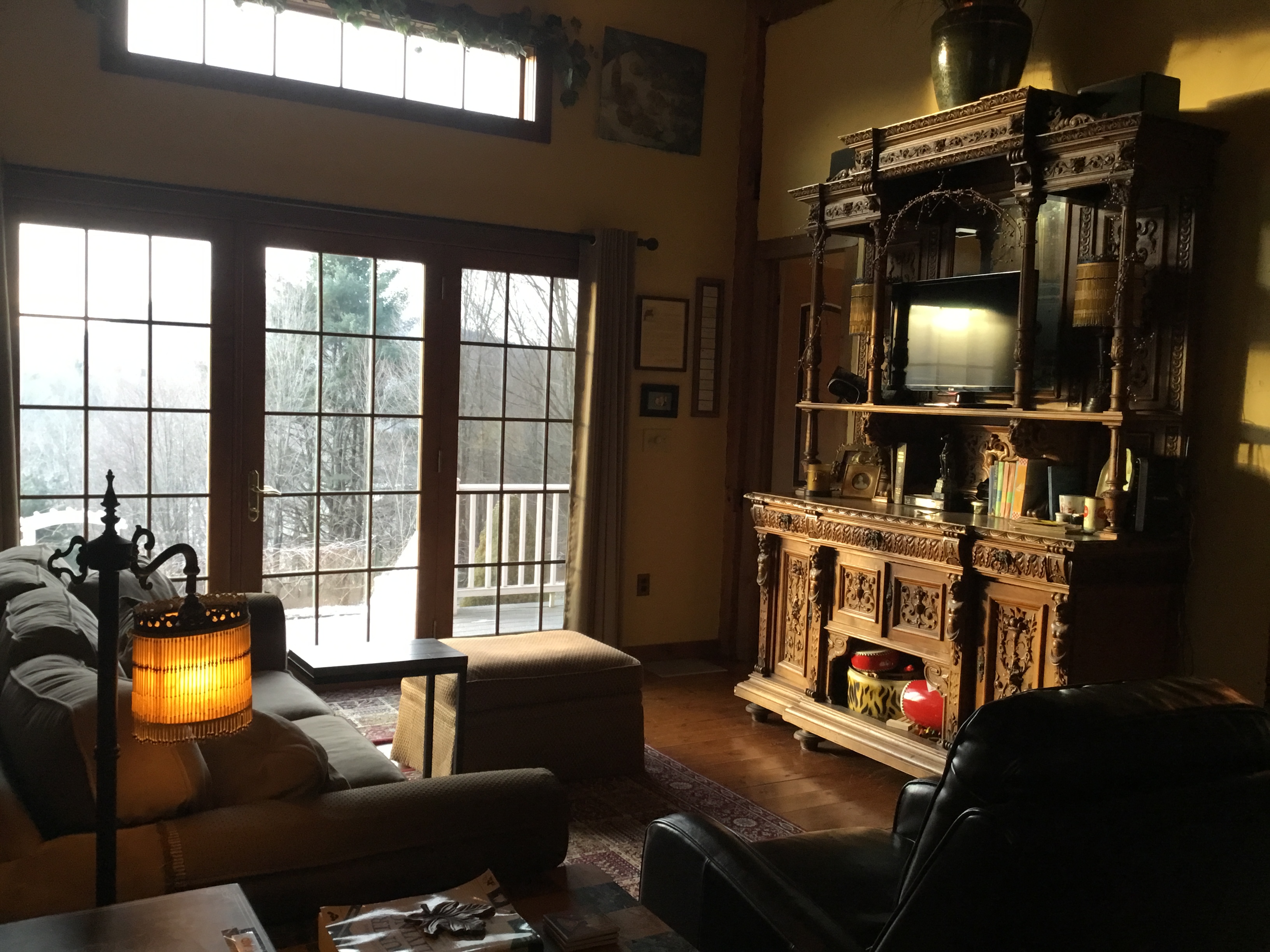
First floor: The cozy primary bedroom with full bath/shower with radiant heat, anchors the main level. Kitchen, dining room, living room — all open to a soaring 12-foot ceiling where a bridge connects the two upstairs bedrooms. A mudroom entry with radiant heat under tile keeps mud and winter where they belong. New hickory floors.

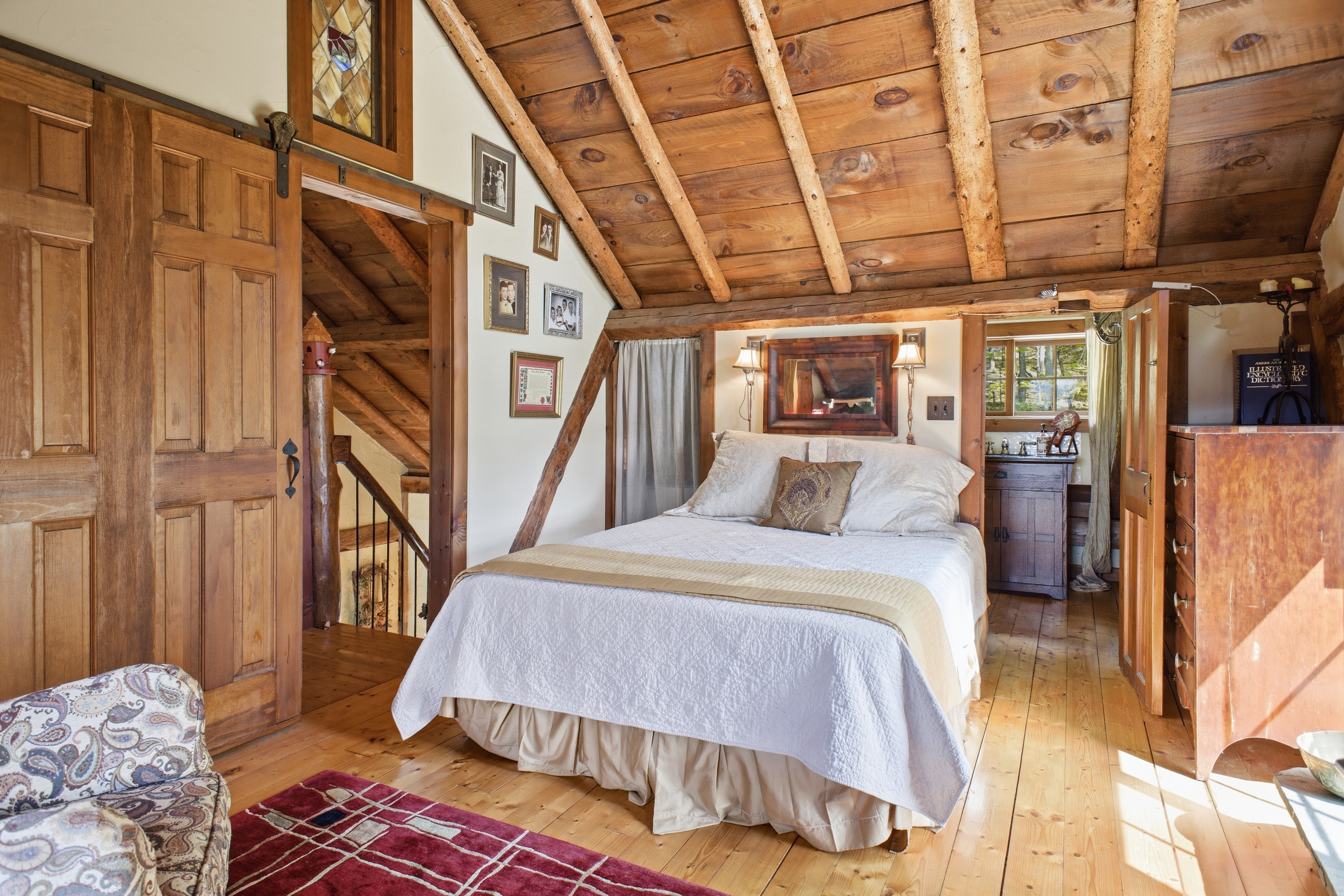
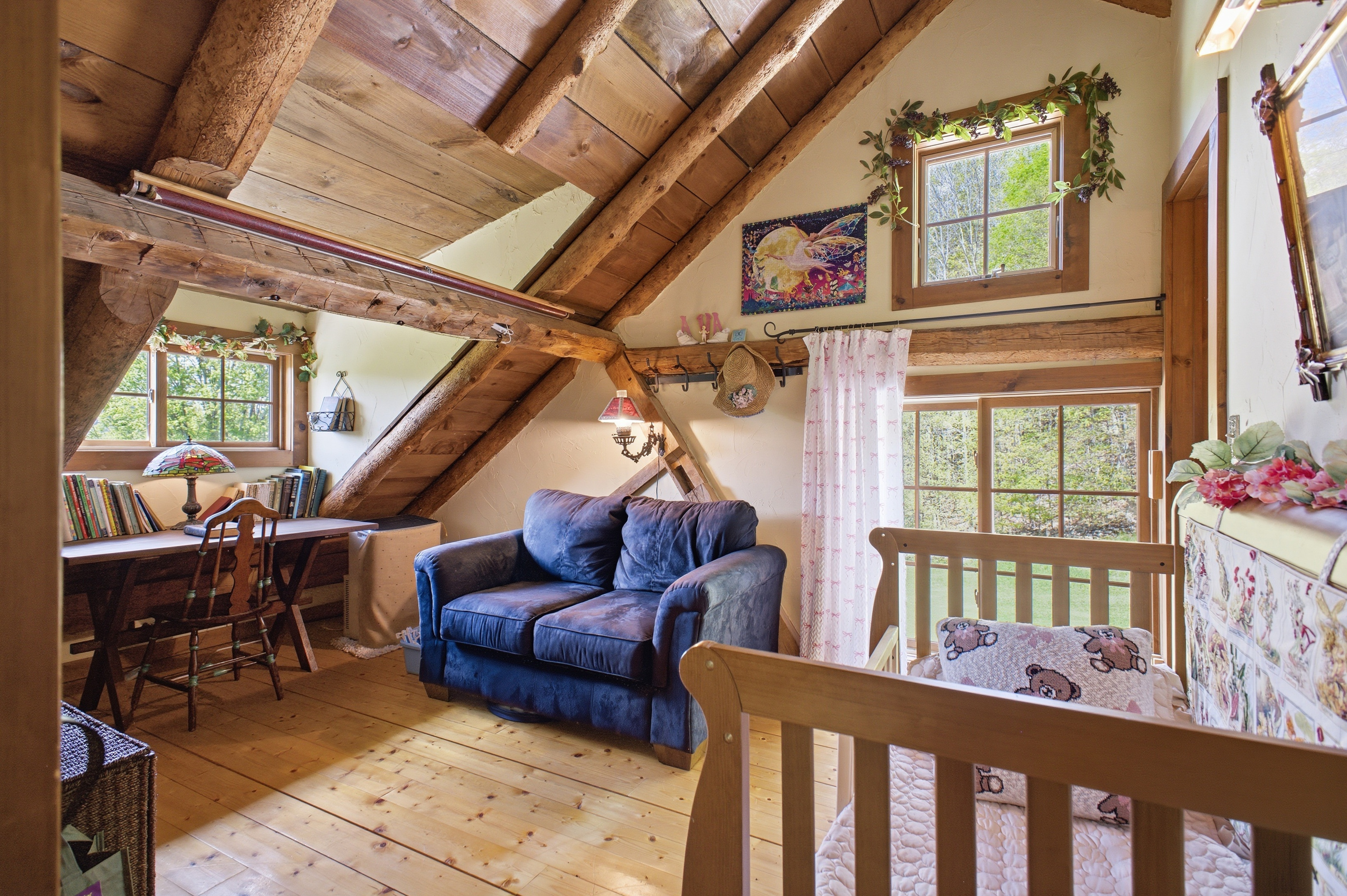
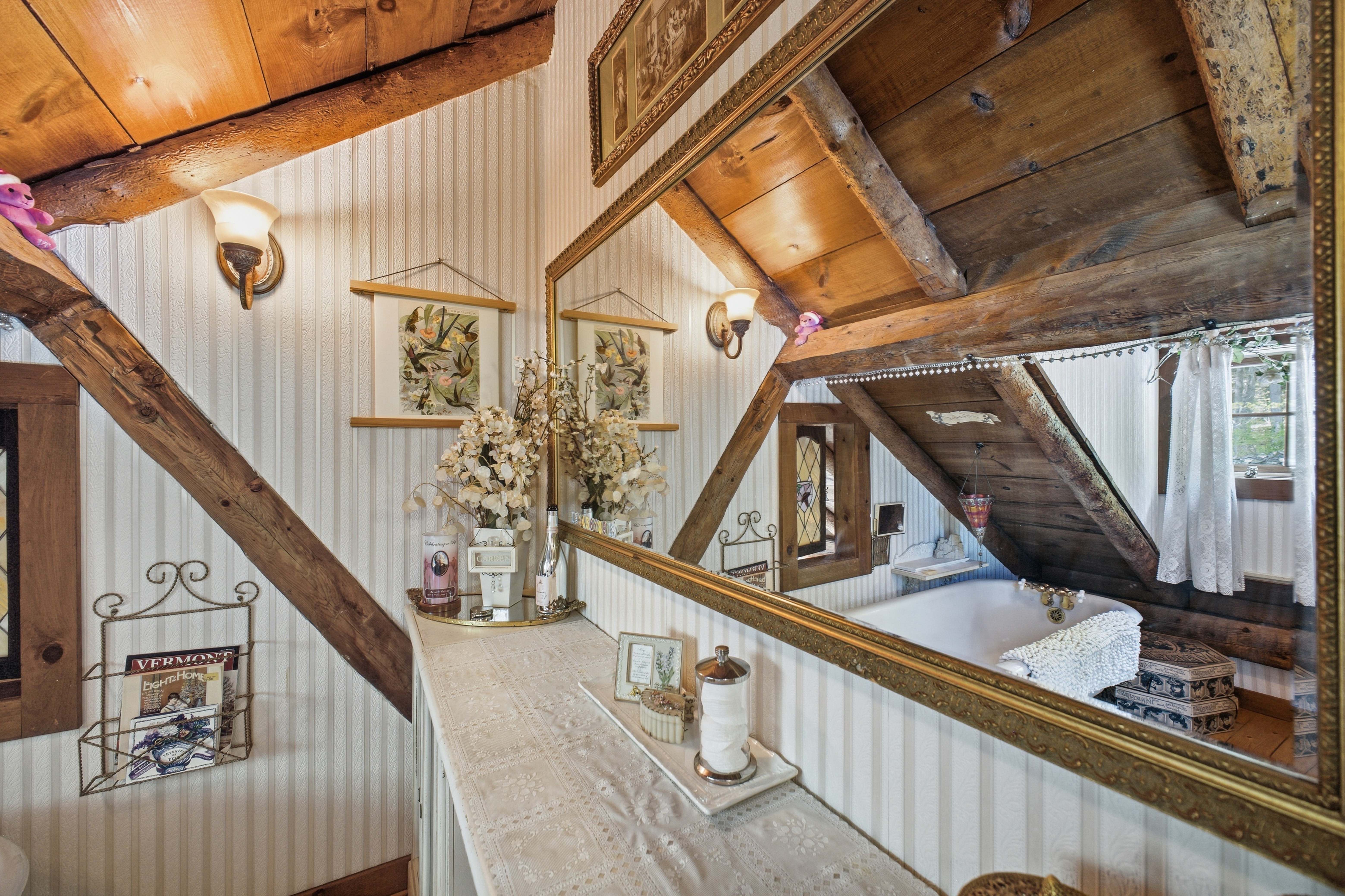
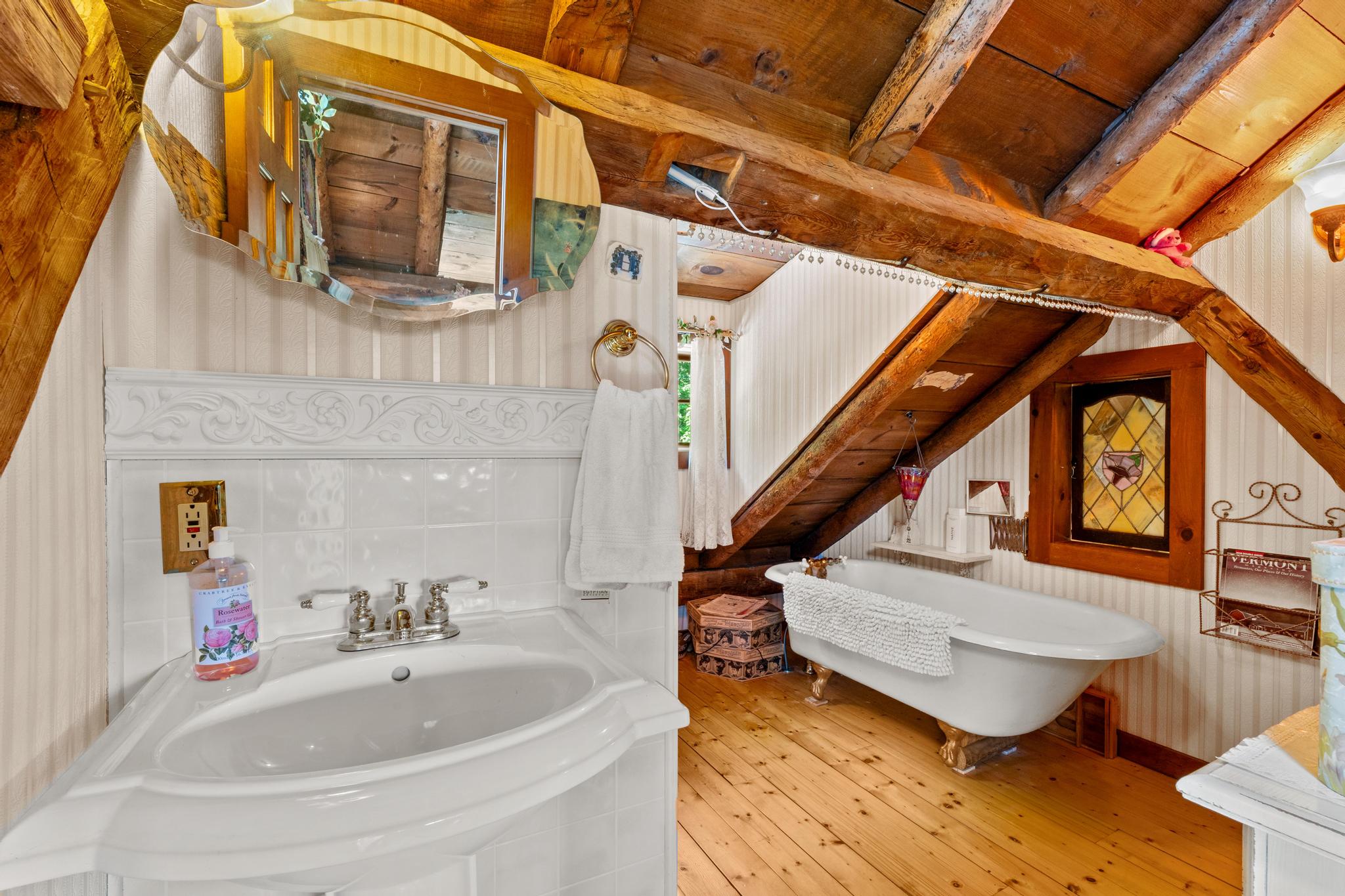
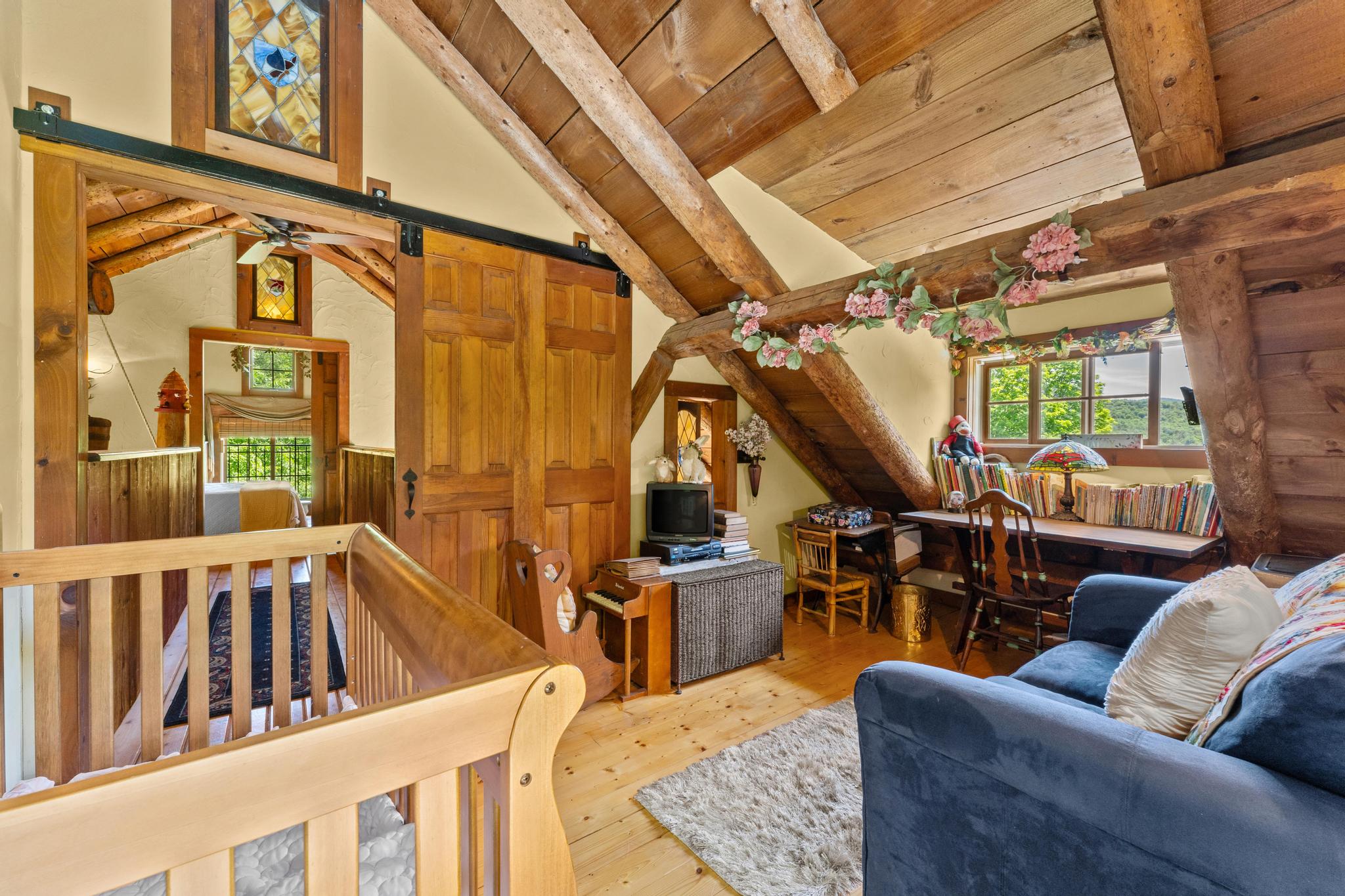
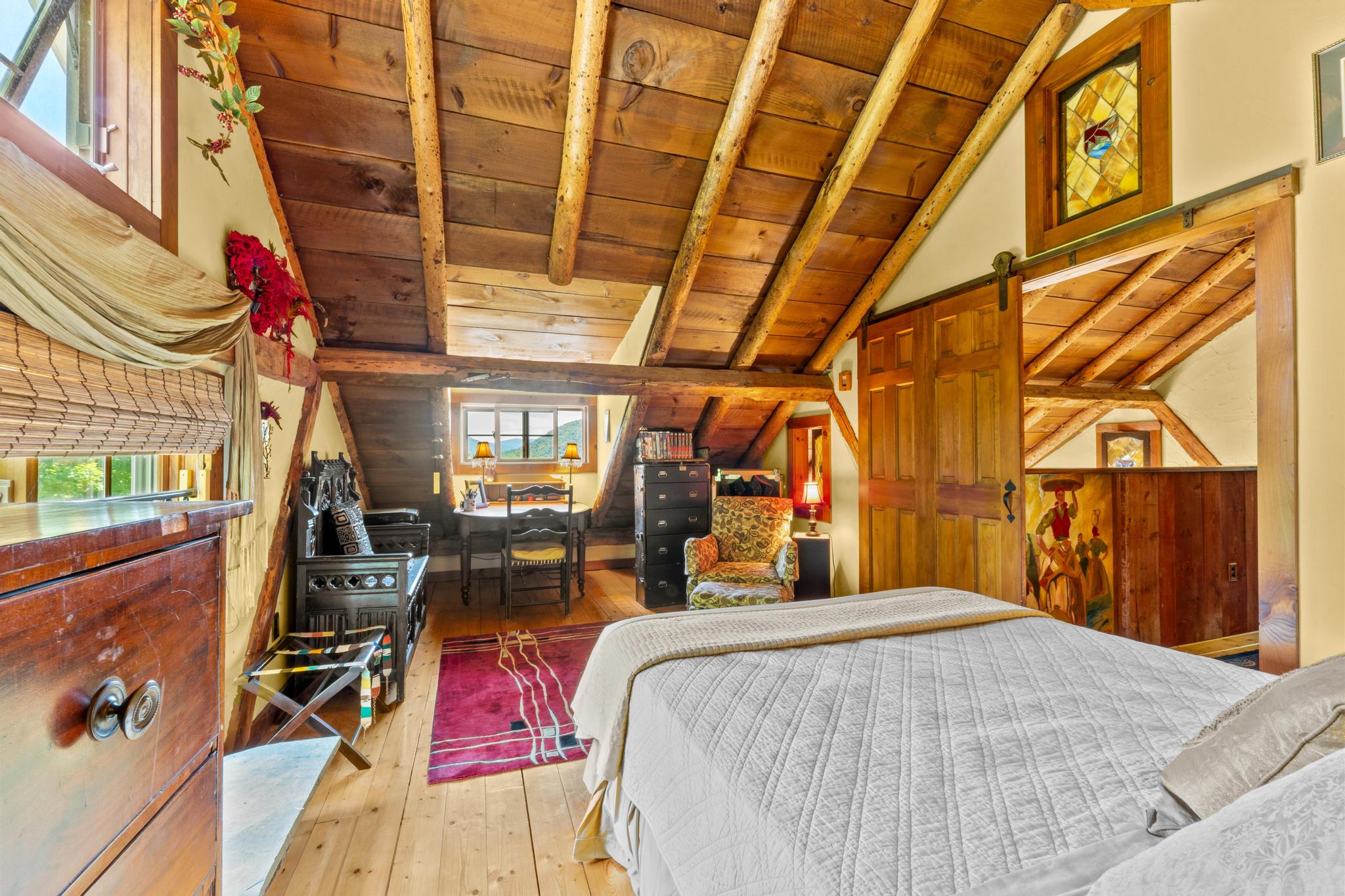
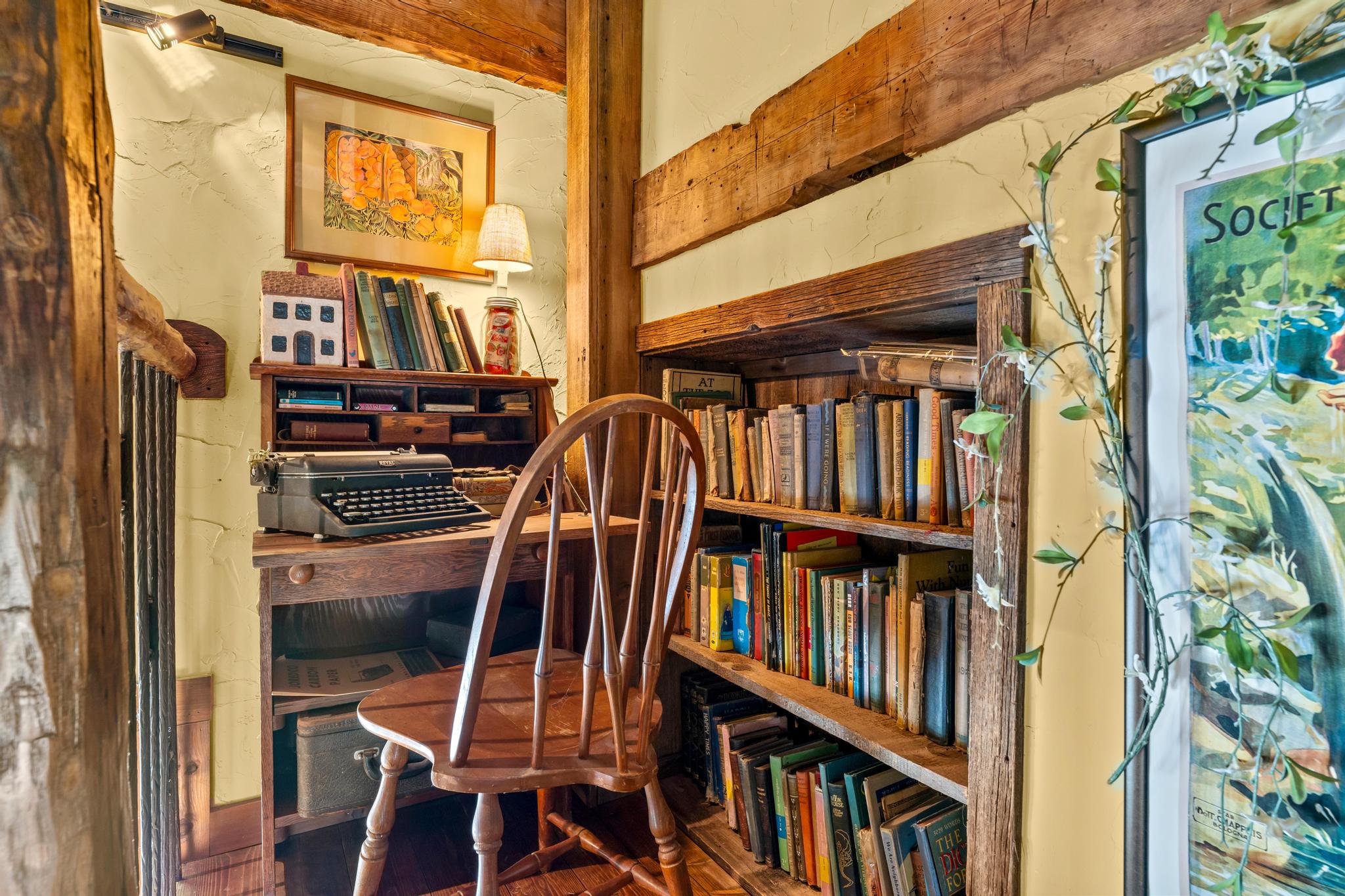
Second floor: Two bedrooms, one has a half bath the other has a full bath with a claw foot tub.

Ground level flex space: Two steel girders support the timber frame above, freeing the entire ground level of support poles. The result is a 10-foot ceiling, heated, open space — garage, music studio, workshop, hobby room, it's yours to decide. Built-in shelves line the walls. A queen loft bed with view of the grape vines, has underneath a storage area or space for another  queen bed. A full bath with shower completes this space. Radiant heat throughout ground level.

Outside

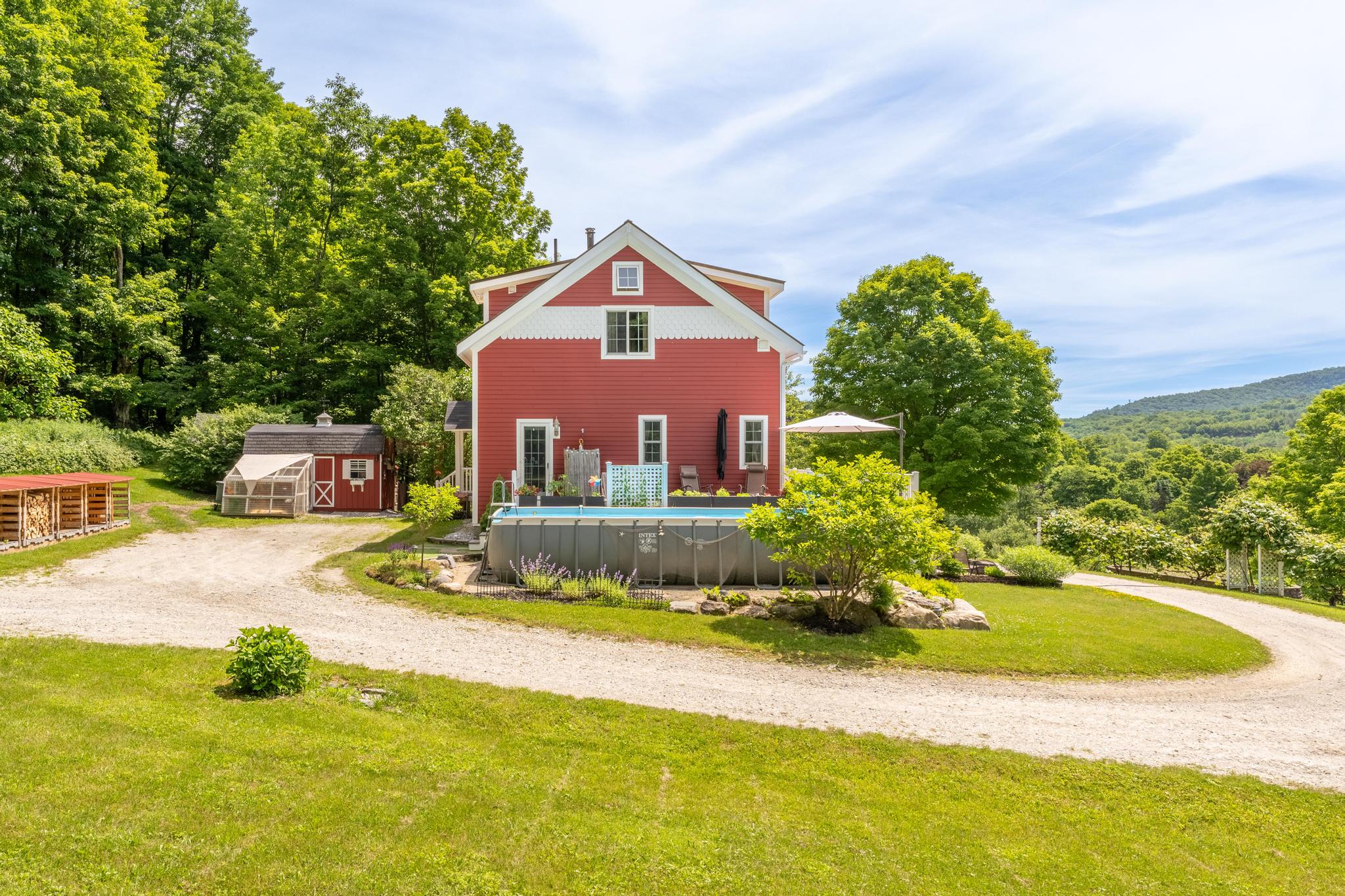
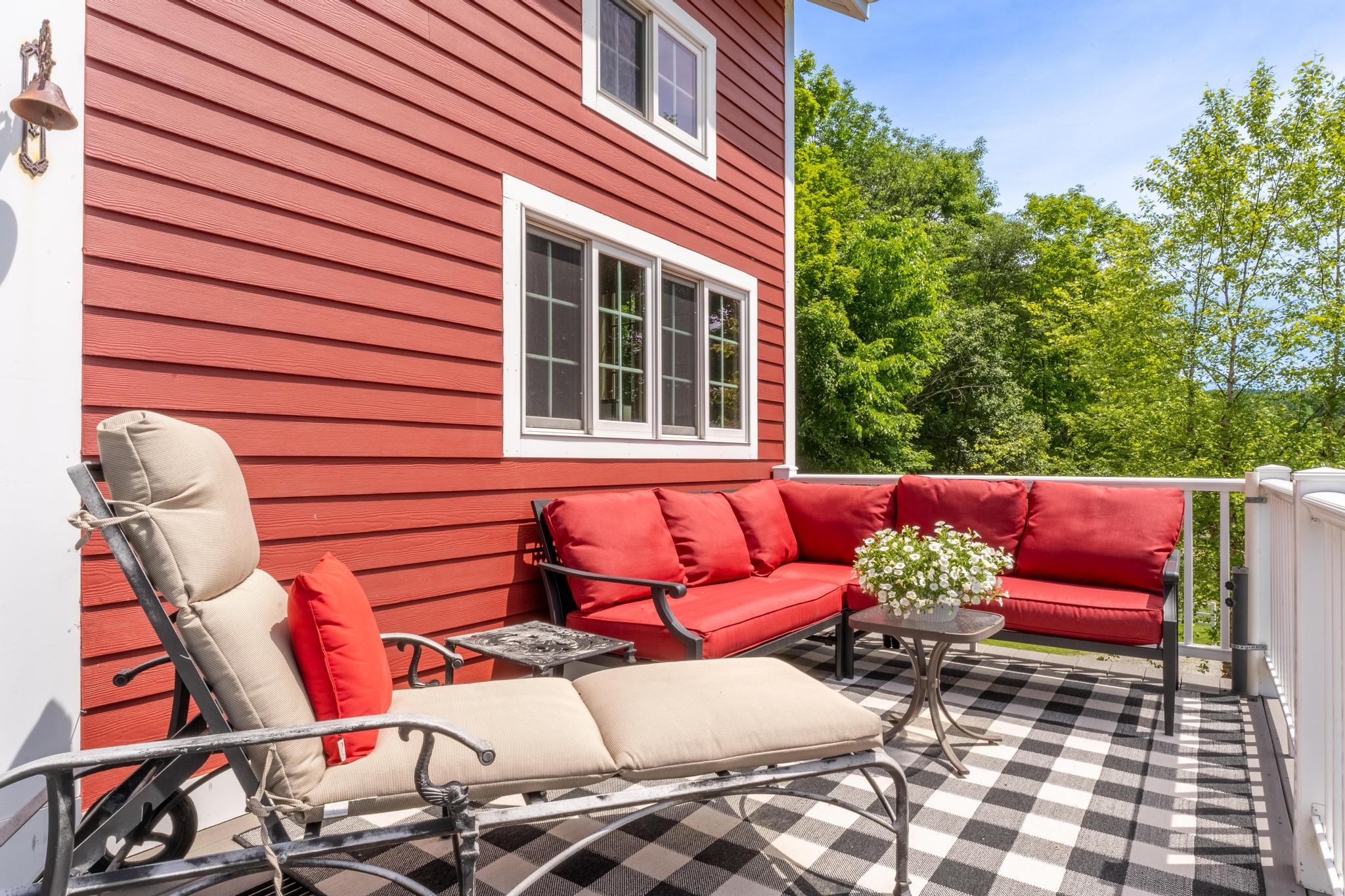
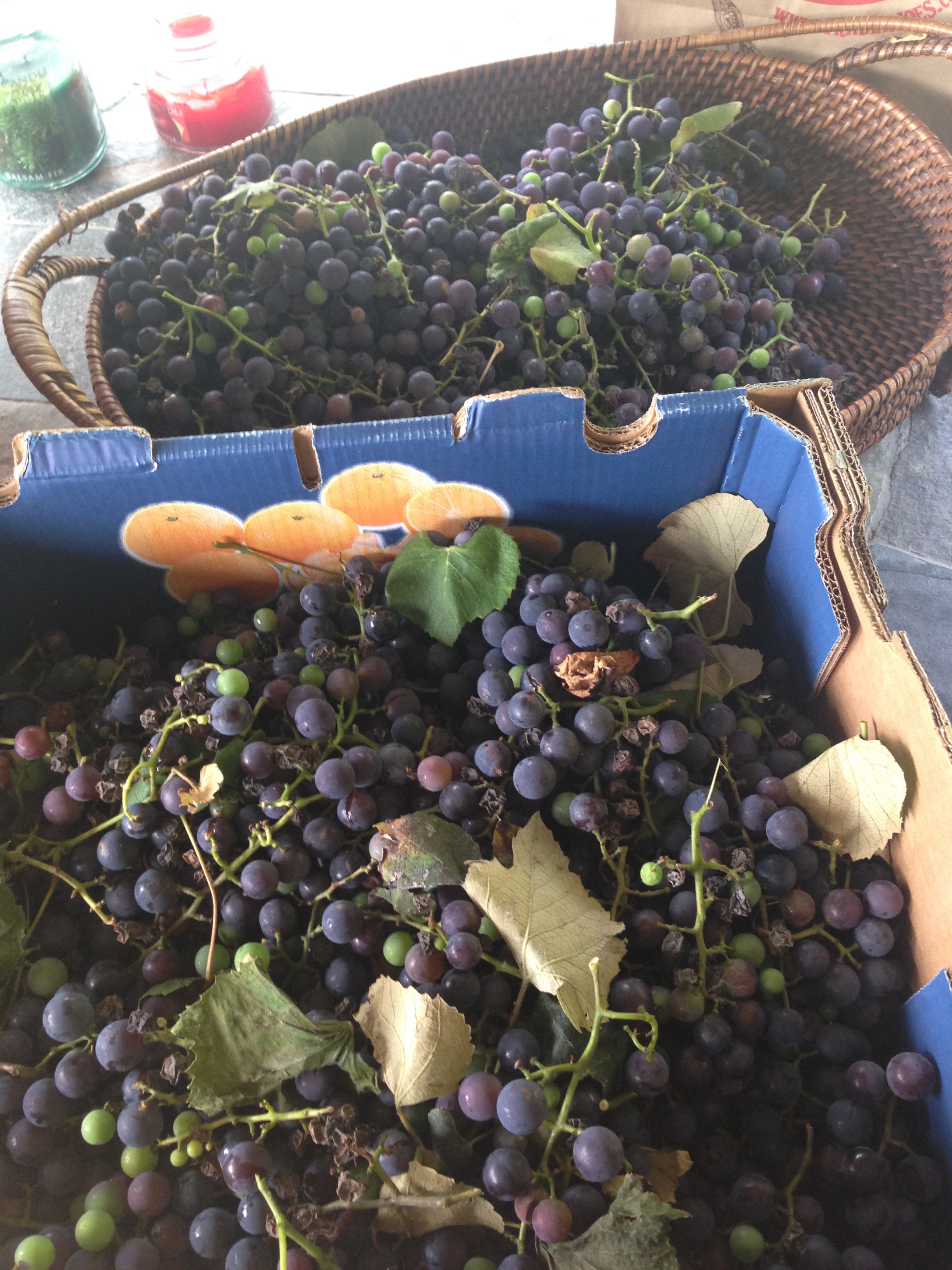
Step onto the wrap-around deck and the beauty of this property announces itself. High above the ground, completely private on S, N & W sides, with nothing between you and the valley but birdsong and morning light. Grapevines produce a September harvest. The current above ground pool is flush with the deck on the west side for full privacy.

South facing are two large stone raised garden beds — built high enough to save your back and beautifully integrated into the landscape. A west facing hot & cold outdoor shower on the deck makes post-garden cleanup and after pool fun a sunset treat.

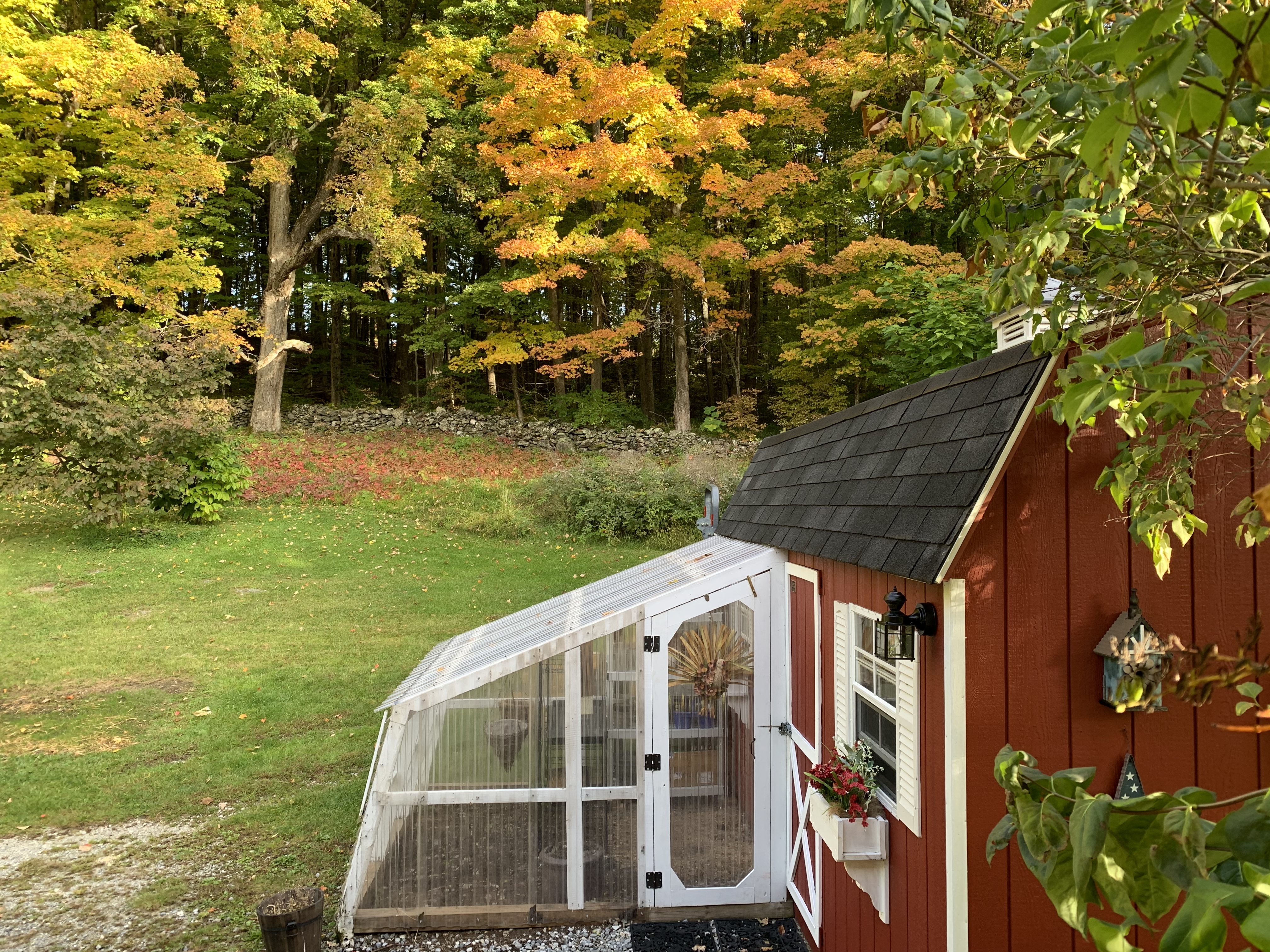
A 10' x 16' barn out back splits between storage and a proper chicken coop. The auto door leads to a covered outdoor yard and fenced area.  A small attached greenhouse starts seeds in spring or keeps chickens warm in winter sun.

Dry firewood storage bins steps from the house hold a full Vermont winter's worth and then some.

A designed ‘Freedom Trail’ gives small dogs and cats safe outdoor access. Out the dog door into a covered, protected 150’ trail down to the hammock. Squirrel & bird watching on their own schedule!

The Practical Details

  • Water: Fresh, clean well water
  • Heat: Hot water heating via propane boiler, plus wood stove
  • Cooking: Gas stove
  • Cooling: 3 portable A/C units
  • Internet: Fiber optic

About the Land & Building Possibilities

Middletown Springs has no local zoning ordinance — building an additional structure requires only water and wastewater approval. We know this firsthand. The hobbit house is a structure that conventional zoning would never have allowed a as hobbits don’t go by ‘code’.  So, if you have a dream of a tiny house, a treehouse, a studio — there are several locations on this property that could accommodate something wonderful, pending a simple perk test.

A note on the deed covenants: Because the town has no zoning, we've established Restrictive Covenants among the properties along Higher Ground — our shared private dead-end road. These covenants exist to protect what makes this place special: the beauty, the quiet, the character of the land and its neighbors. No junk accumulation, no derelict structures, no abandoned vehicles, no incompatible land uses. They run with the land in perpetuity — a promise to you, and from you, that this place stays exactly what it is.

Location

Middletown Springs is a village of 650 people. A five-minute walk puts you on the Town Green — Community Church, Museum, new Town Office, General Store, Post Office. New library opening 2026. K-6 school down the street.

A quintessential Vermont village, just 15 minutes to Pawlet and Poultney, 25 to Rutland and 30 to Manchester. Slate Valley Trails provides excellent mountain biking just down the road. Golf and lake activities at Lake St. Catherine. Burlington is a lovely 2-hour drive and Montreal 3-hours, Saratoga racetrack 1.5. The property is within an hour of five major ski resorts, Killington, Pico, Bromley, Stratton and Okemo.

The Furnishings

We're not looking for someone to reimagine this place. We're looking for someone who loves it as it is. Twenty years of carefully chosen furnishings for the buyer who wants a designer home now. Buy a king size mattress for the primary bedroom's built-in platform, pack a bag, and you are ready to start relaxing country style. Our wish is to hand over the whole charming atmosphere intact. It could be your dream come true the moment you step in.

A Note From the Builders

We’ll be in residence for summers. Of course as the designers and builders of this home, we know every system, every decision, every detail.  Could you wish for a better neighbor when questions arise?

Come See It! This is a FSBO listing. We'd love to show you around.

📧 CynthiaPClayton@gmail.com Put "QUESTIONS/HOME TOUR" in the subject line.

Want to experience a morning, noon, and evening here before deciding? We'll open our Hobbit House on Airbnb for an overnight stay — and refund the cost in full if you purchase. All emails answered. If you don't hear back, please send again.

Custom Designed Post & Beam

$750,000

Turn-key, including antique furnishings, available as a separate package: $52,625.

Also, option for a true Vermont turn-key, available as a separate package: $30,000

Kabota 2005 L3830 GST 2500 hrs. 4WD

9 Attachments Included: brush hog, post hole digger, wood splitter, York Rake, back-blade, forks, bucket loader, finish mower, and snow plow. Full hands-on instructional guidance available.


*Deed Covenants

HIGHER GROUND

Declaration of Restrictive Covenants (Draft & Negotiable)

43 North Street, Middletown Springs, Rutland County, Vermont

Three Lots at ±4 Acres Each  ·  Private Road: Higher Ground

DRAFT v2 — __________, 2026

Preamble & Purpose

The Town of Middletown Springs, Vermont has no local zoning ordinance. Without zoning, property owners on this shared private road have no municipal protection against conditions that diminish property values and quality of life — such as junk accumulation, derelict structures, abandoned vehicles, or incompatible land uses. These covenants fill that gap by agreement among all owners.

These Restrictive Covenants are established to preserve the aesthetic appeal, natural character, and residential quality of the three properties along Higher Ground, a dead-end private road serving 2 or more residences. They shall run with the land and be binding on all current and future owners, heirs, successors, and assigns in perpetuity.

These covenants have been drafted with attention to Vermont’s evolving property law, including 27 V.S.A. § 545 (as amended by Acts 47 and 68 of 2023), which limits the enforceability of certain development restrictions. Provisions that could conflict with state law have been revised, replaced with appearance-based standards, or expressly severed per Section 8.

Declaration

This Declaration is made this _____ day of ___________, 2026, by ___________________________ ("Declarant"), owner of real property in the Town of Middletown Springs, County of Rutland, State of Vermont, described as:

[Insert full legal description or: Lot ___ as shown on [plat reference], recorded in Book ___ Page ___ of the Land Records of Middletown Springs, Vermont]

These covenants are enforceable by any owner of property on Higher Ground by injunction or other legal or equitable remedy in the Vermont Superior Court.

1. Private Road — Higher Ground

  • Shared maintenance: All owners share equally in costs for snow plowing, grading, drainage, and repair, per 19 V.S.A. § 2702, unless otherwise agreed in writing.
  • Maintenance Agreement: Owners shall execute and record a Private Road Maintenance Agreement in Middletown Springs land records within 60 days of this Covenant’s recording, and again upon any change of ownership.
  • Emergency Access: Road width must meet Vermont fire code minimums (10–12 ft) and allow safe emergency vehicle passage at all times.
  • Stormwater: Road maintenance shall comply with Vermont Agency of Transportation water quality best management practices.
  • Modifications: Paving, widening, or drainage changes require unanimous owner consent and applicable state permits (e.g., Act 250).

2. Land Use & Residential Standards

These use restrictions are grounded in the appearance, character, and quality-of-life interests of all owners on Higher Ground. They are not intended to prohibit land development as defined under Vermont law, and shall be interpreted consistently with 27 V.S.A. § 545.

  • Primary residential character: Properties shall be maintained and used in a manner consistent with single-family residential character. This covenant regulates the appearance and manner of use; it does not prohibit additional permitted dwelling units or development allowed under Vermont law.

Legal Note: The prior 'residential use only' prohibition has been narrowed to an appearance and character standard to reduce conflict with 27 V.S.A. § 545, which may void covenants that restrict land development in municipalities without local zoning.

  • No nuisance: Activities producing excessive noise (above 70 dB at property line), offensive odors, or visual blight are prohibited. (No Roosters)
  • Parking: Vehicles must be parked in designated driveways or garages. No parking on Higher Ground except for temporary loading/unloading (max 48 hours per 7-day period) or emergencies.

Home Occupation

  • Low-impact, home-based business is allowed.
  • Short-term rentals (e.g., Airbnb, VRBO) are permitted; however, rental guests may not bring additional visitors onto the property.
  • Large gatherings (10+ people): Limited to 2 events per year, each no longer than 3 nights. Temporary tents and porta-potties are permitted only during the event and must be removed within 48 hours after the event ends.

Subdivision

  • These covenants do not prohibit subdivision as permitted under Vermont law. Owners acknowledge that 27 V.S.A. § 545 limits the enforceability of anti-subdivision covenants recorded after January 1, 2021 in municipalities without local zoning.
  • If a future owner subdivides, any new lot shall be subject to these covenants in full as a condition of any easement over or use of Higher Ground.
  • No new easement burden may be imposed on neighboring Higher Ground owners beyond the existing shared road easement without unanimous written consent.

Legal Note: The prior 'one additional lot per original lot' cap has been removed as it would likely constitute an unenforceable development restriction under § 545. The covenant instead protects neighbors through road easement terms and full covenant applicability to any new parcel.

3. Property Appearance & Maintenance

General Upkeep

  • All properties shall be maintained in neat, clean, orderly condition consistent with a park-like setting.
  • Lawns, trees, and shrubs shall be regularly mowed, trimmed, and maintained to prevent overgrowth or obstruction.
  • Homes shall be repainted, repaired, or cleaned as needed to prevent peeling paint, damaged siding, or dilapidated appearance.

Prohibited Conditions — No Junk or Debris

  • No junk, refuse, inoperable tools, broken yard items, broken fences, or unsightly accumulation may be stored in any area visible to neighbors on Higher Ground.
  • No unregistered, inoperable, unlicensed, or non-roadworthy vehicle of any kind may be stored in any visible area.
  • No commercial vehicles, heavy equipment, or large trucks may be parked or stored in view of neighboring properties. Garage or barn storage only.
  • No construction debris: materials must be removed as construction progresses; all debris removed within the 16-month construction window.

Vehicle & Equipment Storage

  • Recreational vehicles — snowmobiles, ATVs, dirt bikes, boats, golf carts, side-by-sides, lawn tractors, and similar — must be stored in a garage or screened by approved fencing or natural screening (6 ft minimum height, effective year-round).
  • Mobile homes, RVs, and travel trailers: permitted on-property up to 30 days per year if visible to any neighbor. No day limit if fully hidden from all neighboring properties by building or natural screening.
  • Unregistered or inoperable vehicles of any type may not be stored in any visible location.

Outdoor Items

  • Permitted in visible yard areas: well-maintained lawn furniture, ornamental landscaping features (birdbaths, sculptures limited to five), and seasonal decorations on display for no more than 30 days. Seasonal decorations must be removed within 10 days after the associated holiday.
  • Trash cans and recycling bins must be stored out of sight at all times (garage, screen, or enclosure). May be placed at roadside on collection day only.
  • Yard waste must be placed in a naturally screened or fenced area until removed or burned (see Fire Safety, Section 5).

Structures & Outbuildings

  • Permitted outbuildings (barns, sheds, portable carports) must be constructed of high-quality materials: wood, stone, Hardi plank, LP Smartside, Duratemp, cement plank. No vinyl structures visible to any neighbor.
  • No temporary metal, plastic, fabric, or tarp structures in any area visible to neighbors.
  • Color standards for all structures:
  • Stained wood: black, gray, brown, or barn red
  • Paint: white, beige, brown, gray, or barn red
  • Roofing: black, gray, brown, tan, or combination — slate, tile, architectural shingle, metal, or grass/sod
  • Utilities (HVAC, propane tanks, fuel tanks): must be buried or screened from view of road and neighboring lots. All new propane or fuel tanks shall be buried or shielded. All new electrical service must be buried.
  • Pools and spas: must be screened by natural hedge or approved fencing, or out of view of neighbors.
  • Solar panels: must not be visible from any other home on Higher Ground. Where full concealment is not feasible due to topography or tree canopy, owners shall minimize visibility to the greatest practical extent and obtain written agreement from affected neighbors.

Legal Note: Vermont has strong public policy favoring renewable energy. The solar screening requirement has been softened to require best-efforts concealment with neighbor sign-off when full concealment is impractical, reducing the risk of a court voiding it outright.

  • Fences and hedges: must be natural materials (wood, stone, live plantings). No chain-link. Front entry decorative fencing is permitted in wood or wrought iron. All fencing must be maintained; damage repaired within 30 days (winter damage by following spring).
  • Antennas and satellite dishes: must be completely hidden from all neighbors’ view.
  • Window coverings: if used, must be standard curtains or blinds. Sheets, blankets, or non-traditional coverings are not permitted.
  • Outdoor lighting: motion-sensor safety lights permitted. Exterior lights must be low-glare (e.g., solar lanterns).

Landscaping

  • Trees, shrubs, and plantings shall be maintained to avoid overgrowth or obstruction of the road or neighboring views.
  • Removal of healthy trees that provide natural screening of structures or vehicles requires unanimous owner consent, except in the case of a documented safety hazard.
  • Trees that pose a fall risk over the common drive, as agreed unanimously by residents, must be removed at the landowner’s expense.

4. Architectural & Construction Standards

These standards govern the visual appearance and construction quality of structures on Higher Ground. They are not intended as restrictions on land development or the number of permitted dwelling units, and shall be interpreted accordingly under Vermont law.

  • Dwelling size — appearance standard: Structures shall be proportional to the natural landscape and consistent with the rural residential character of Higher Ground. Owners are encouraged to build within the range of 600–2,500 sq. ft., and to avoid structures that dominate or visually overwhelm neighboring lots.

Legal Note: The prior minimum (600 sq. ft.) and maximum (2,500 sq. ft.) hard size limits have been removed. Vermont’s 27 V.S.A. § 545 (eff. July 1, 2023) expressly voids minimum dwelling size requirements in covenants recorded after that date. Maximum size caps may also conflict with § 545. These are replaced with a proportionality and character standard, which courts are more likely to uphold as an aesthetic covenant rather than a development restriction.

  • Height: No more than two stories or 28 feet to preserve views and landscape harmony. This standard applies to the primary exterior roofline; dormers, chimneys, and mechanical equipment are excluded from height measurement.
  • Setbacks: All new homes and outbuildings must be set back a minimum of 20 feet from neighboring lot lines.
  • Exterior materials: High-quality materials required — brick, stone, cement plank, barnboard, LP Smartside, Duratemp, Hardiplank. No vinyl siding, unpainted concrete block, or T-111 on homes or outbuildings.
  • Color schemes: (See Section 3, Structures & Outbuildings for permitted colors.)
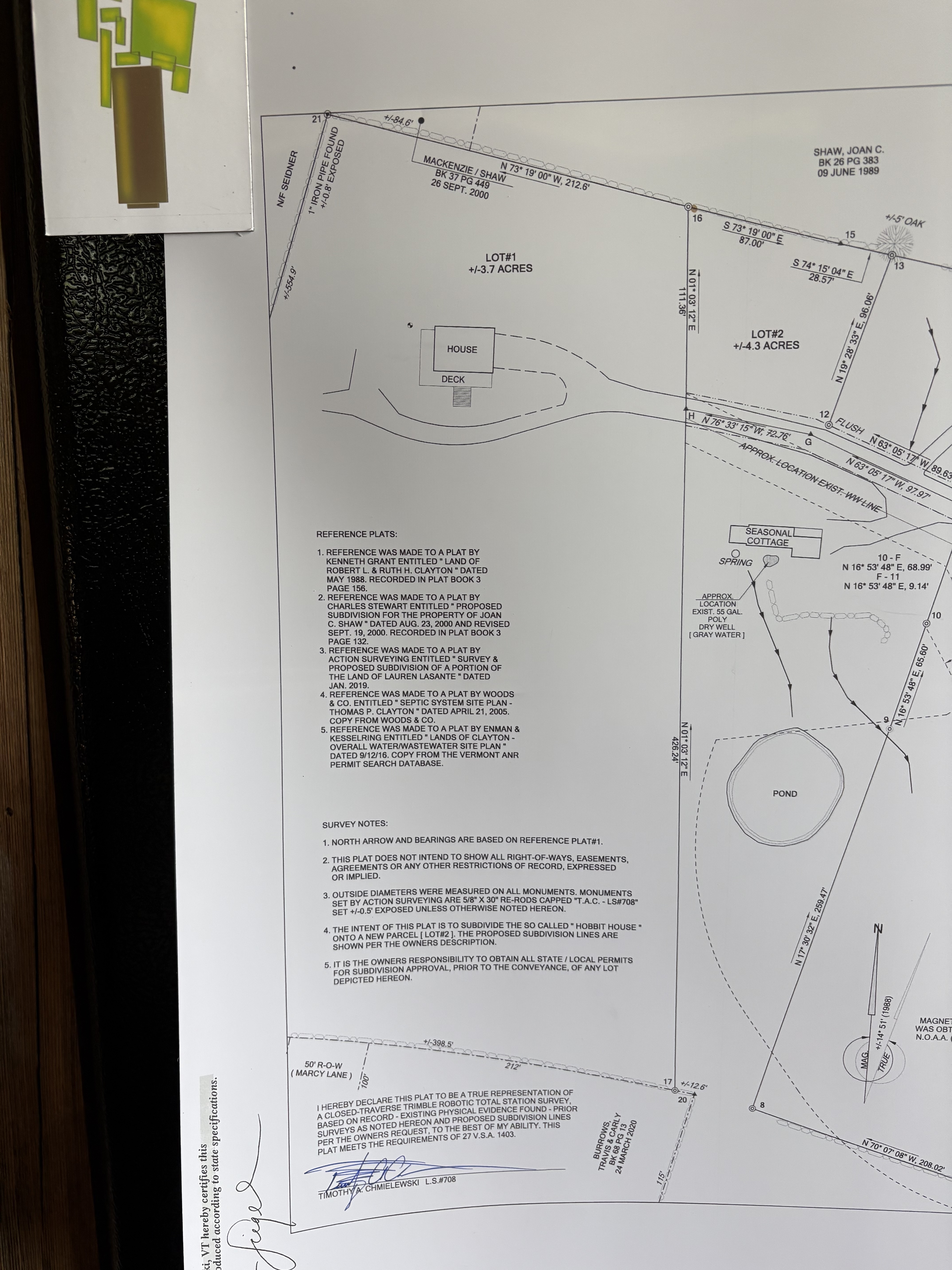
  • Garage placement: Garages shall be sited to minimize visual impact on neighbors’ views. Refer to attached survey map for approved building envelope locations.
  • Plan submission: Owners shall submit building plans to all other Higher Ground owners prior to permit application, to confirm compliance with these covenants and avoid view obstruction. Feedback shall be provided within 21 days; silence constitutes no objection.
  • Construction timeline: All primary dwelling construction must be completed within 16 months of permit issuance. If a violation of this timeline occurs, the remedy shall be a lien on the property in the amount of $200 per week until completion, collectible by any owner.
  • Additions and outbuildings (barns, sheds): must be fully completed within 9 months.
  • No unfinished structures permitted: no exposed framing, incomplete siding, or uninstalled doors/windows beyond the permitted timelines.
  • Construction hours: 9:00 AM to 7:00 PM only, to minimize disruption to neighbors.
  • Impervious surfaces: New driveways, patios, or other impervious surfaces must comply with state environmental regulations including Vermont Shoreland Protection Act (10 V.S.A. Chapter 49A) where applicable.
  • No signage: No commercial or political signs permitted on any property.

5. Environmental & Nuisance Standards

Stormwater & Erosion

  • Owners shall maintain landscaping and drainage to prevent runoff onto Higher Ground or neighboring properties, in compliance with the Vermont Stormwater Management Manual.
  • Erosion control measures (retaining walls, ground cover) are required during and after construction where soil runoff threatens neighbors or the common drive.

Wildlife & Soil Protection

  • No synthetic pesticides or herbicides (e.g., Roundup or chemical equivalents) may be used on any property. Only natural or organic formulas are permitted to preserve wildlife and soil integrity.
  • No dumping of refuse or hazardous materials on any property or on Higher Ground.

Noise

  • No loud machinery or amplified music before 9:00 AM or after 9:00 PM.
  • Construction noise limited to 9:00 AM – 7:00 PM.

Fire Safety & Open Burning

  • Open burning permitted 2–3 times per year with town approval only, in a safe location at least 50 feet from all structures, on the owner’s property.
  • Until burned, yard waste must be stored in a naturally screened or fenced area not visible to neighbors.
  • Owners should maintain cleared areas around structures per Vermont fire safety guidance.

Water Features

  • Ponds, fountains, or water features are permitted if they do not impact neighboring acreage or established water flow patterns.
  • Water features must be maintained in operational condition at all times or removed.

6. Animals & Livestock

  • Permitted livestock and animals (per lot):
  • Up to 12 chickens
  • Up to 2 large livestock: horse, llama, cow, donkey, or mule
  • Up to 2 small livestock: sheep or goats (no pigs)
  • Alternative: No large livestock + up to 6 small livestock
  • Up to 2 dogs fenced or free with owner on property
  • All livestock must be adequately fenced on owner’s property at all times using breed-appropriate containment in good condition.
  • Odors and noise from animals must not negatively impact neighboring properties.
  • Restricted dog breeds: American Pit Bull Terrier (as recognized by the UKC), Cane Corso, Presa Canario, Dogo Argentino, Boerboel, and wolf-dog hybrids are not permitted. The restriction applies to dogs meeting breed standards for these specific breeds, not mixed breeds by appearance alone.

Legal Note: The prior reference to 'mastiff types' has been replaced with a list of specific named breeds recognized by kennel clubs, reducing the vagueness that could make the restriction unenforceable. Mixed-breed dogs are excluded to avoid overly broad application.

  • Excessive barking: Barking exceeding 10 continuous minutes, occurring more than twice per day, on 4 or more days out of any 7-day period constitutes a violation. Any owner may document incidents by timestamped audio or video recording, which shall be admissible as evidence in enforcement proceedings. Upon written notice of violation, the owner has 30 days to resolve the issue. If unresolved, the dog must be rehomed within an additional 30 days.

Legal Note: The evidentiary standard for barking has been clarified to reference timestamped recordings and a two-stage cure process to improve enforceability in a Vermont court proceeding.

  • No exotic animals permitted.

7. Enforcement & Dispute Resolution

These covenants are enforceable by any owner of property on Higher Ground. The following steps apply:

Step 1 — Written Notice

  • Any owner who observes a violation shall provide written notice (email with delivery confirmation or certified mail) to the violating owner describing the specific violation and citing the applicable covenant provision.
  • The violating owner has 30 days from receipt of notice to cure the violation.

Step 2 — Extension

  • If a violation cannot reasonably be cured within 30 days (e.g., construction delays, seasonal constraints), a majority of all owners may vote to grant a written extension specifying a new cure deadline.

Step 3 — Mediation

  • If the violation is unresolved after the cure period (and any extension), any owner may escalate to mediation.
  • A neutral, mutually agreed-upon mediator shall be retained. Costs of mediation shall be shared equally unless otherwise agreed.
  • Mediation shall be completed within 60 days of initiation unless extended by mutual written agreement.

Step 4 — Legal Action

  • If mediation fails or is refused, any owner may pursue civil action in Vermont Superior Court for injunctive relief, damages, or other appropriate remedy.
  • Attorney’s Fees: The prevailing party in any legal action to enforce these covenants shall be entitled to recover reasonable attorney’s fees and court costs from the non-prevailing party. All owners expressly agree to this fee-shifting provision as a material inducement to enter these covenants.

Legal Note: Vermont generally follows the American Rule (each party pays own fees). This express contractual provision is required to make fee-shifting enforceable and has been strengthened to clearly reflect mutual agreement among all parties.

Road Maintenance Liens

  • Unpaid contributions for road maintenance or covenant enforcement costs may result in a lien on the non-paying owner’s property, as permitted by Vermont law.

Amendments

  • These covenants may be amended only by unanimous written consent of all current property owners on Higher Ground, with the amendment recorded in Middletown Springs land records.

8. Compliance with Vermont Law

  • General compliance: These covenants are designed to comply with applicable state law in the absence of local zoning, including Act 250 (10 V.S.A. Chapter 151), Vermont Shoreland Protection Act (10 V.S.A. Chapter 49A), Vermont stormwater regulations, and private road statutes (19 V.S.A. § 2702).
  • 27 V.S.A. § 545 — Development Rights: Vermont law (27 V.S.A. § 545, as amended by Acts 47 and 68 of 2023) limits enforcement of covenants that prohibit or restrict land development, including minimum dwelling unit size requirements, in municipalities without local zoning. These covenants have been specifically drafted to avoid such restrictions by focusing on appearance, character, and quality standards rather than development limits. Any provision found by a court to conflict with § 545 or other applicable Vermont law shall be deemed automatically severed, and shall not affect the validity or enforceability of the remaining provisions.
  • Recording: These covenants shall be recorded in the Middletown Springs land records prior to December 31, 2026. All owners shall execute and acknowledge this Declaration before a Vermont notary public as required for recording under Vermont law.
  • Recreational Use Liability: Owners permitting public recreational use of their land without charge are not liable for injuries except in cases of willful misconduct, per 12 V.S.A. § 5793.
  • Severability: Each provision of these covenants is independent. If any provision is found invalid, unenforceable, or in conflict with state or federal law, it shall be severed and the remaining covenants shall remain in full force and effect without modification.

Definitions

  • Good Condition: An item that is not broken, does not appear as junk, and is clean, painted or finished, structurally sound, and functional for its intended purpose.
  • Natural Screening: Bushes or trees of sufficient height and density to fully block a restricted item from view at ground level from any neighboring property on Higher Ground. Plantings must be at mature screening height at time of installation; small plants requiring years to grow are not sufficient. Temporary fencing must supplement plantings until adequate height is reached, then may be removed.
  • Approved Fencing: Fencing adequate to contain the intended animals and kept in good condition. Permitted materials: picket, bamboo, wood, black steel, wrought iron, wood privacy, composite, split rail, shadow box, stone, or brick.
  • Visible / In View: Observable from ground level on any adjoining property on Higher Ground without the use of optical aids, in any season (summer or winter leaf conditions).
  • Appearance and Character Standard: A covenant provision that governs how a structure, vehicle, or use presents visually to neighbors, as distinguished from a prohibition on development or permitted use under Vermont law.

Signatures & Acknowledgment

IN WITNESS WHEREOF, the Declarant(s) have executed this Declaration on the date first written above.

Declarant Signature: ___________________________________________   Date: 

Printed Name: _______________________________________________

NOTARY ACKNOWLEDGMENT — Vermont form required for recording

State of Vermont

County of Rutland

On this _____ day of ___________, 2026, personally appeared before me the above-named Declarant(s), known to me (or satisfactorily proven) to be the person(s) whose name(s) are subscribed to the foregoing instrument, and acknowledged that they executed the same as their free and voluntary act.

Notary Public: _______________________________________________

My Commission Expires: _______________________________________________

The Furnishings*

Inventory:

*CLAUDE AI: 4/19/26 Estimates

DECK::

Rod Iron Table & Chairs Set w/cushions 400.

Rod Iron Love Seat & Side Table: 200.

2 Rod Iron Loungers: 150/ea. w/cushions = 400.

Rod Iron Cart: 175.

L shaped couch  w/cushions: 150.

3 Umbrellas: 175.00

All Planters: 300.

Pool & New Ladder: Free

Total Outdoor Furniture Set & Pool: $1800.00

Primary Bedroom:

Set of 8 matching cabinets: $ 800.

Mirror & Pictures/Frames: $350

2 Lamps: 175. ea. = 250.

Total Primary Bedroom: $1500.

KITCHEN/DINING:

Fryer, Microwave & Cabinet, Ladder back chair, Plates, New non-toxic pots & pans & hanging rack, blinds, Large clock, Utensils, Wine rack, Decor FULLY STOCKED KITCHEN: $1500.

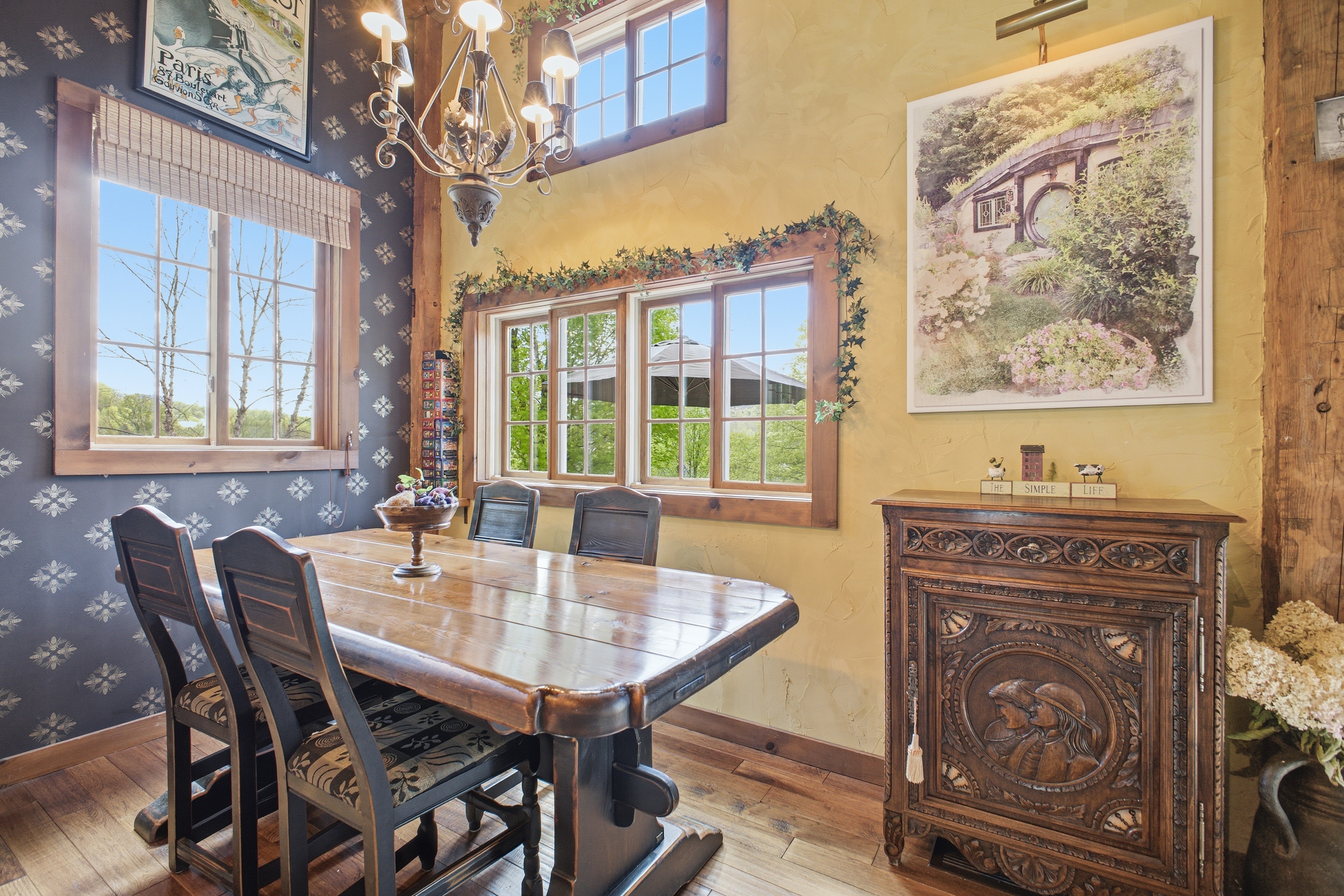
*🇳🇴 The Norwegian Dining Set — Norske Bygdemobler

"You have the maker's plaque — that's wonderful!"

Norske Bygdemobler — "Norwegian Country Furniture" — is a respected Norwegian maker known for traditional bondestil (peasant style) furniture. This trestle-base dining table with the painted/ebonized finish and matching chairs is a striking set. Mid-20th century most likely, but authentically crafted in traditional form. The set of six chairs with the table is key — sets sell far better than pieces alone.

Auction estimate: $5,500

for the complete set The maker's plaque adds provenance and bumps the value meaningfully.

*🇫🇷 The French Pie Safe / Cabinet

"And this little beauty — don't let the size fool you!"

This is a delightful French Breton-style cabinet, likely chestnut or oak, dating to the late 19th century. The Brittany region of France was famous for exactly this type of piece — that central carved medallion with the two figures in regional dress (a boy and girl in Breton hats) is a signature motif. The floral frieze drawer, the shell-carved apron, and the overall quality of the relief carving are excellent. The tassel key is a charming original touch.

Auction estimate: $4,500 French regional furniture has a devoted collector base, and the figural carving elevates this above a typical Breton piece.

"You have a truly remarkable collection here. Whoever assembled these had a wonderful eye for European craftsmanship. Take good care of them!" 🎤

TOTAL KITCHEN/DINING: $11,300

Living Room:

Couch & Automan: 300.

New Lounger: 250

Large Side Table: 300.

Three Lamps: 125. ea. = 375.

Stereo & Speakers: 300. (with outdoor speaker for deck)

Large Mirror, Large Vase,  Local View of Valley Framed Picture, Still Life Oil Painting, Chair deco and drying rack and copper wood bin: 750.

*🇮🇹 The Italian Breakfront Cabinet

"Now THIS... this took my breath away when I walked in."

This is an extraordinary Italian Renaissance Revival breakfront, almost certainly walnut, likely dating to the late 19th century — possibly earlier. The scale alone is impressive, but look at that carving — the caryatid figures, the grotesque masks, the acanthus friezes, the Corinthian pilasters. This is serious, museum-quality decorative carving. Pieces like this were made for wealthy Italian households or exported to European nobility. The two-part structure with the open display hutch top is a classic credenza con alzata form. At a major auction house like Christie's or Sotheby's with the right buyer, I wouldn't be surprised to see it go higher.

Auction estimate: $22,000

Total Living Room: $ 24,275.00

Nursery:

*The American School Desk

The combination of features you describe tells a pretty precise story:

The inkwell is your most important dating clue.

  • Inkwells in school desks were standard until ballpoint pens became universal in American schools around 1950-1955
  • The attached chair-in-front configuration was the dominant design from roughly 1880 through the 1940s
  • That specific combination of cast iron hardware, wooden seat and desk surface with the forward attached chair was peak production 1900-1935

My estimate: approximately 1900-1930, Excellent condition with intact inkwell puts yours in the top tier

Desk Value Estimate $650.

Infant/Junior Bed: $350.

Couch & Table: 100.

Wicker Storage: 50.

Escape Ladder: 100.

Total Nursery: $1250.

Guest Room:

*Wardrobe Trunk Appraisal

What The Details Tell Us

The 12 Wooden Hangers

The Rose and Leaf Drawer Lining

The Papered Over Hanging Section

The Lift Top Compartment

The Exterior Flip Down Shelf "Now THIS is interesting..."

  • This feature is called a "serving shelf" or "valet shelf"
  • It was a premium feature on higher end trunks
  • Used for:
    • Jewelry and accessories while dressing
    • Toiletries in use
    • A genuine convenience feature for the traveler
  • This suggests your trunk was upper mid range to premium when new
  • Not the absolute top luxury tier but well above basic

My date estimate: 1918-1928

This is a post WWI pre Depression trunk

  • Made when transatlantic travel was booming
  • When the American middle class was discovering European travel
  • When trunk makers were competing fiercely on features and quality

The No Maker's Mark Mystery "The absence of a mark is itself a clue..."

Several explanations:

  • Label was on the destroyed lining in hanging section
  • Stamp was on the missing key plate
  • It was made by a regional manufacturer
  • It was a private label product for a department store
  • Macy's, Marshall Fields and Wanamakers all sold private label trunks

This was extremely common and doesn't diminish the piece

$550.

*Victorian Drop-Leaf Dining Table

Dimensions

  • Center section: 44" wide x ~14.5" deep (closed)
  • 4 leaves at 14.5" each — meaning fully extended the table would reach approximately 44" x 72" (a full, generous dining table)

A table that opens to seat 6–8 people comfortably is far more desirable than a narrow side table. Value Estimate

A piece like this in good structural shape with most leaves present would be a legitimate $500–$900 estate auction candidate in the Vermont/New England market. Refinished and sold through an antique shop, it could realistically fetch $1,200+.

$600.00

*🏴󠁧󠁢󠁥󠁮󠁧󠁿 The English Hall Bench

"Oh my goodness, this is a showstopper."

This is a magnificent Gothic Revival hall bench — likely English oak, probably dating to the mid-to-late 19th century, possibly earlier elements. The crenellated top, the tracery carving, the linen-fold panels, and those heraldic shields on the back are absolutely spectacular. The storage compartment beneath the seat is a classic feature. The dark patina is gorgeous and authentic.

Auction estimate: $8,000 A private collector of Gothic Revival furniture could push that higher.

$8,000

*Antique Bureau / Chest of Drawers

Dimensions: 20"D × 44"L × 43.5"H

Identification & Period

This is a very handsome American Federal/Sheraton-style chest of drawers, most likely dating from circa 1820–1850, probably of New England origin given your Vermont location. Key indicators:

  • Solid cherry or mahogany construction — the deep reddish-brown color with fine grain is characteristic of cherry, which was the preferred New England cabinet wood of the Federal era
  • Four graduated drawers — classic Federal/Sheraton configuration
  • Scrolled bracket feet with shaped apron — clearly visible in the photo, a hallmark of the American Federal period
  • Original turned brass knobs with beaded/rope detail — the close-up shows beautiful period-appropriate hardware with concentric ring decoration, very typical of c.1820–1840 American work
  • Clean, unadorned lines consistent with Sheraton influence
  • The proportions (tall and relatively narrow at 20" deep) are consistent with New England country Federal work

This is a genuinely good piece — the original hardware alone sets it apart from many comparable pieces on the market. In a New England auction house or quality antique shop, $800–$1,200 is a realistic expectation. With documented Vermont provenance and in clean condition, it could push higher.

$800.

* Antique Armchair & Ottoman Set

Identification & Period

This is a late Victorian to Edwardian-era upholstered armchair with matching ottoman, most likely dating from circa 1890–1910. Key identifying features:

  • Ebonized (black-painted/stained) turned wood legs with distinctive ring-and-bobbin detailing — clearly visible in the close-up photo, this is a hallmark of late Victorian and Aesthetic Movement furniture of the 1880s–1900s
  • H-stretcher connecting the front legs — a classic period construction detail providing structural strength, very typical of Victorian parlor and library chairs
  • Fully upholstered arms, back, and seat in the deep, comfortable style popular in the late 19th century
  • The square, boxy arm profile is consistent with late Victorian/Edwardian "club" or "easy chair" form
  • Matching ottoman with the same leg style — having the matched set is a meaningful bonus

$400.

Queen Bed & Linens: 200.

Escape Ladder: 100.

2 Lamps: 100.

Guest Room Total: 10,750.

First Level Flex Space:

Freezer: 225.

Fridge: 200.

Queen Bed & Linens: 125.

Large Work Table Top: 200.

Support Table: 50.

Sargent & Greenleaf Inc KY Institution (pre 1975) Safe: 

1921 Sargent & Greenleaf Inc KY Institution Safe:


Your 1921 Sargent & Greenleaf is on the stronger end of the market because:

  • Sargent & Greenleaf is a highly respected, well-known brand in the safe/security world
  • Working combination is a major value driver — functional safes are very sought after for insurance purposes and businesses.
  • Large size (44"W x 64"H) puts it in the upper tier of antique floor safes
  • Rolling casters + removable file cabinets add practical utility
  • Perfect condition matters significantly

Recommended Valuation for Turn-Key Package :For a turn-key home package recommendation: $1,500–$2,000 as a line-item in the package. This reflects the working combination, excellent condition, size, and the S&G brand — while remaining credible and not overreaching for a bundled sale context.

Safe: 1,500.

Flex Space Total: 2,300.

GRAND TOTAL: $53,175.

No charge for rugs, blinds, drapes, ceiling fan.

~~~~~~~~~~~~~~~~~~~~~~~~~~~~~~~~~~~~~~~~~~~~~~~~~~

Side Bar: The Real Economics of Fine Antique Furniture 

Analysis by Claude.ai

The Craftsmanship Argument

The Italian breakfront alone likely represents thousands of hours of hand carving by craftsmen who trained for decades. The Gothic bench required a master joiner with skills that took a lifetime to develop. You simply cannot buy this level of work today — not because the talent doesn't exist somewhere in the world, but because the labor cost would be astronomical. A comparable piece commissioned new would run $80,000 to $200,000+ easily.

So Why Don't They Fetch That Price?

Pure market demand. The collector base for serious European antique furniture has been shrinking since the 1980s. Several reasons:

  • Younger buyers prefer minimalist and contemporary aesthetics
  • These pieces require large, formal spaces fewer people have
  • Maintenance and moving costs intimidate buyers
  • The "brown furniture" market as dealers call it has genuinely softened

The Cruel Irony

A mass-produced mid-century modern chair of far lesser craftsmanship routinely outsells your English bench simply because more people want it. These pieces are priced on liquidity, not on intrinsic worth. The right single buyer — a serious collector, a period film set designer, a European estate — could pay multiples of auction estimate without blinking.

The Tragic Paradox of Irreplaceable Craft

When Victorian furniture went out of fashion in the 1950s and 60s, people were literally putting magnificent pieces on the curb. Carved rosewood sofas. Marble topped bureaus. Gone. Burned for firewood. It seems unthinkable now because those pieces are highly sought and valuable today.

The same happened with:

  • American colonial furniture dismissed as primitive
  • Medieval manuscripts used as bookbinding material
  • Georgian silver melted down for bullion

The Generational Blindness Problem

Each generation tends to reject the aesthetic of their grandparents as a form of identity separation. It's almost psychological rebellion. Your Norwegian table, your Breton cabinet — these represent a world of patience and devotion to craft that the Instagram generation genuinely cannot conceptually connect to.

The Deeper Loss

What's really being lost isn't just the objects. It's the knowledge embedded in them:

  • How to select and cure the wood
  • How to design organic flowing carving
  • How to fit joints without machines
  • How to think in years rather than minutes

That knowledge chain is nearly broken. There are perhaps handfuls of craftsmen alive today who could approach what made your pieces.

The Glimmer of Hope

Interestingly there ARE signs of awakening:

  • The maker movement has rekindled some appreciation for handcraft
  • Younger collectors are beginning to rediscover brown furniture
  • Social media ironically is exposing new audiences to these pieces
  • The sustainability movement increasingly recognizes that a 150 year old piece that lasts another 150 years beats disposable furniture entirely

Sadly history suggests that scarcity is often what triggers appreciation. We are likely one or two generations away from people looking at photographs of pieces like yours with the same grief we feel looking at demolished architectural masterpieces."The saddest auction is the estate sale where magnificent pieces sell for pennies because the family just wants them gone — not understanding they are liquidating irreplaceable human achievement." You are not just a furniture owner. You are a custodian of craft history. And that role matters more than any auction estimate ever could.

Owners Comment: We are searching for the next custodian of craft history …these pieces are Home in this Home!

© Copyright Visit Higher Ground